
If you’re a Black woman lying awake at 2am with a mind that won’t quiet — running through tomorrow’s to-do list, replaying a difficult conversation, listening for the kids — you’re not imagining it. You’re not being dramatic. And you are not alone.
Poor sleep is one of the most widespread health concerns in America. But what the general conversation about sleep consistently fails to mention is that Black women bear a disproportionate share of this burden — and for reasons that go far deeper than screen time and late-night coffee.
As a family physician, sleep comes up in my exam room constantly. It’s linked to nearly every chronic condition I treat: heart disease, diabetes, obesity, depression, immune dysfunction. And yet it remains one of the most underdiscussed health topics for women who look like us. This article is my attempt to fix that — to give you a full picture of why you may not be sleeping well, why that matters more than most people realize, and what the evidence actually says about how to fix it.
The Sleep Disparity Nobody Is Talking About
Before we get into the causes, I need to name something directly: Black women sleep worse than almost any other demographic group in the United States — and it’s not a personal failure.
Research consistently shows that Black women have shorter sleep duration, longer sleep-onset latency (meaning it takes longer to fall asleep), and poorer sleep efficiency than white women. We spend less time in the deep, restorative stages of sleep. We wake more often. We report sleep that is more restless and less refreshing.
Why? The research points to a convergence of factors that have nothing to do with individual habits:
- Racial discrimination and chronic stress. A 2024 study published in the Journal of the American Heart Association, drawing on data from nearly 26,000 women, found that everyday discrimination was significantly associated with insomnia symptoms and short sleep duration — particularly in Black women. The body’s “hyperarousal” stress response — being kept perpetually on alert — is a core driver of insomnia. For Black women navigating racism in their workplaces, healthcare settings, and daily lives, that hyperarousal is not episodic. It is chronic.
- The Strong Black Woman schema. Research published in 2024 found a significant association between the “Superwoman Schema” — the cultural expectation that Black women must be endlessly strong, self-sacrificing, and emotionally suppressed — and poor subjective sleep quality. When you are conditioned never to show vulnerability or need, rest becomes something you have to earn rather than something you simply deserve.
- Neighborhood and environmental factors. Noise, light pollution, traffic, crime — these environmental stressors are socially patterned and disproportionately concentrated in Black neighborhoods, creating physical conditions that make quality sleep harder regardless of personal habits.
- Underdiagnosis of sleep disorders. Only 16.2% of Black patients with moderate to severe obstructive sleep apnea have received a formal diagnosis — meaning the vast majority are going untreated. Black patients with sleep apnea also tend to have more severe disease and greater symptom burden than their white counterparts when they finally get diagnosed.
I say all of this not to overwhelm you, but because understanding the real causes of sleep disparities is the first step toward addressing them honestly — for yourself and in your conversations with your doctor.
Why you are not sleeping well?
Sleep disorders come in different forms and can have many causes, including lifestyle choices, medical conditions, and — as we’ve just discussed — structural stressors that your body is carrying even when you’re lying still. Let’s look at the most common.
Insomnia
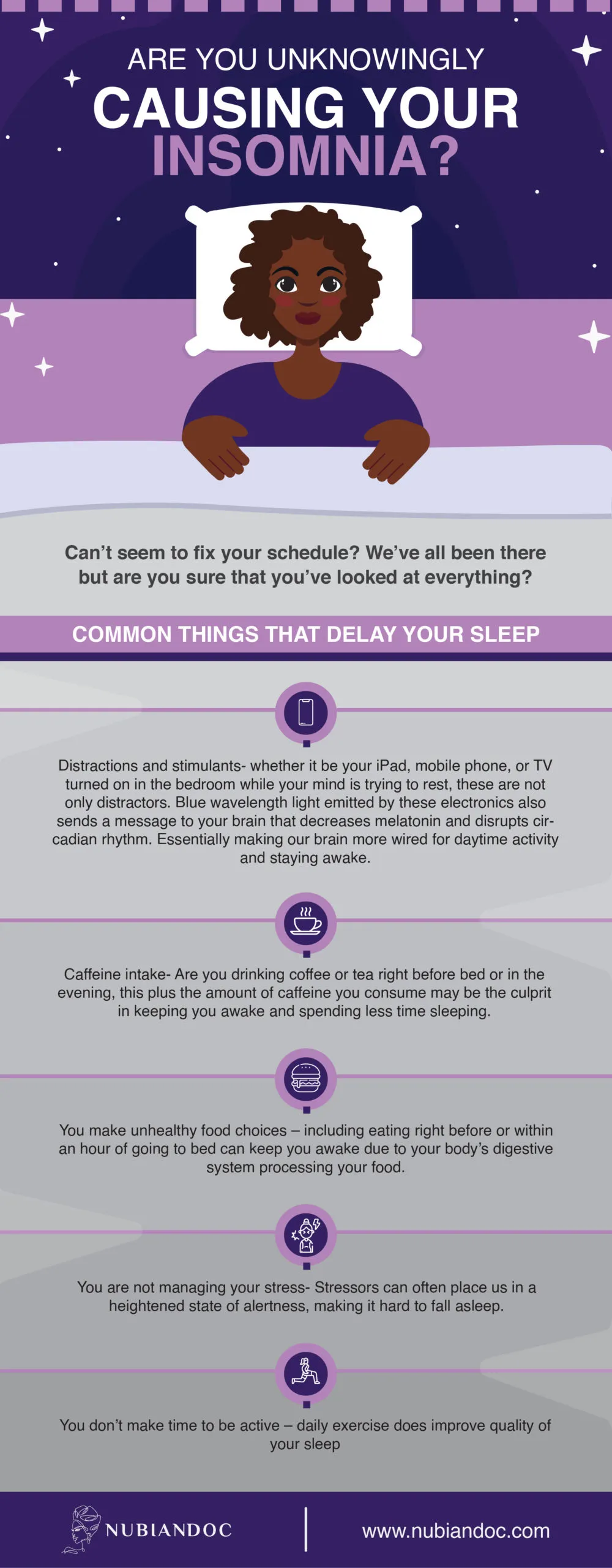
Insomnia is the most common sleep disorder. Approximately 30% of adults in the US report symptoms of insomnia, and the rates are higher in Black women. In insomnia, a person cannot fall asleep, wakes up prematurely, or wakes feeling unrested.
Short-term insomnia is often triggered by something identifiable: jet lag, illness, stress, a medication change, or yes — too much coffee too late in the day. Chronic insomnia is more complex. Stress, depression, and anxiety are common drivers, and a particularly frustrating cycle develops: people suffering from long-term insomnia begin to associate their bed with wakefulness and difficulty, and that conditioned association keeps them awake, which creates more stress, which creates more insomnia. Understanding this cycle is actually central to the most effective treatment, which I’ll cover below.
Sleep Apnea
Sleep apnea occurs when the muscles of the throat relax too much during sleep, narrowing or blocking the airway. The result is repeated brief interruptions in breathing that fragment sleep — often without the person even knowing it’s happening. Partners often notice it first through snoring or gasping sounds.
Risk factors include obesity, certain craniofacial structures, nasal congestion, and hormonal changes. Black Americans are disproportionately affected by sleep apnea and substantially more likely to have severe, undiagnosed disease. If you snore, wake with headaches, feel exhausted despite a full night in bed, or have been told you stop breathing in your sleep — please ask your doctor about a sleep study. Untreated sleep apnea is not just an annoyance; it carries serious cardiovascular consequences.
Restless Leg Syndrome (RLS)
Restless Leg Syndrome is a neurological condition characterized by an uncomfortable, often irresistible urge to move the legs — typically in the evenings or at night when lying down. It’s frequently described as a crawling, tingling, or aching sensation that only moving the legs relieves. Not surprisingly, it significantly disrupts the ability to fall and stay asleep. RLS is underdiagnosed in women and can worsen during pregnancy, iron deficiency, and with certain medications including some antidepressants and antihistamines.
Pregnancy and Postpartum Sleep
Research shows that 44.2% of women report insomnia in their first trimester of pregnancy — and it doesn’t necessarily get better from there. Rising progesterone, frequent urination, physical discomfort, and the emotional weight of anticipating a new life all conspire against restful sleep. In the third trimester, the size of the abdomen alone makes comfortable positioning a challenge. And postpartum? The demands of a newborn — regardless of how many people are helping — represent one of the most severe sleep disruption patterns a person can experience. This is a medical issue, not a personal failing, and it deserves to be taken seriously by your care team.
Nightmares and Night Terrors
Nightmares occur during REM (Rapid Eye Movement) sleep and can be triggered by stress, illness, trauma, or certain medications. They are more prevalent among people who have experienced trauma — and given that Black women carry elevated exposure to interpersonal and systemic trauma, this is worth naming directly. If your nightmares are frequent, distressing, and affecting your daytime functioning, they may be a sign of post-traumatic stress that warrants professional support.
Lifestyle Factors
The lifestyle contributions to poor sleep are real, even if they’re not the whole story. Exercising too close to bedtime raises core body temperature, making it harder for the body to transition into sleep mode. Late-night eating, irregular sleep schedules, excessive caffeine after noon, and — as we all know by now — screen exposure before bed all interfere with the body’s natural sleep architecture. A 2013 review in the Journal of Sleep Disorders & Therapy linked late-night gadget use, late evening meals, and caffeinated drinks to chronic sleeplessness — and little has changed in the evidence since.
Why Sleep Matters More Than You Think
Here’s what I wish every patient of mine understood: sleep is not passive recovery. It is active, essential biology. The CDC recommends at least 7 hours of sleep for adults, and in 2022, the American Heart Association added sleep duration to its Life’s Essential 8 — the core metrics of cardiovascular health. That is a significant recognition of what the science has been building toward for years.
Sleep and Your Heart
Poor sleep is now understood as a direct cardiovascular risk factor. Research shows that sleep deprivation and disordered sleep contribute to cardiovascular disease through multiple pathways: immune-inflammatory dysregulation, oxidative stress, metabolic disturbances, and endothelial dysfunction — the kind of damage that leads to hypertension, atherosclerosis, coronary artery disease, and stroke. For Black women who already carry elevated cardiovascular risk, inadequate sleep compounds an already serious burden.
Sleep and Metabolism
Laboratory studies clearly show that sleep deprivation alters glucose metabolism and disrupts the hormones that regulate appetite — including ghrelin (which increases hunger) and leptin (which signals fullness). Chronic sleep loss creates a biological environment that promotes weight gain and insulin resistance. If you’ve ever noticed how much easier it is to overeat after a bad night’s sleep, that’s not lack of willpower. That’s hormones doing exactly what sleep deprivation programs them to do.
Sleep and Your Brain — Including Dementia Risk
This is an area where the research has become significantly more alarming in recent years. A 2024 UCSF study found that poor sleep quality in midlife — specifically difficulty falling asleep and early morning awakening — was associated with accelerated brain atrophy, a key marker of dementia risk. A 2024 review from Texas Tech University Health Sciences Center confirmed that sleep disturbances — including insomnia, sleep apnea, and disrupted sleep cycles — can worsen dementia progression and accelerate cognitive decline.
This matters profoundly for Black women. African Americans are two to four times more likely to develop Alzheimer’s disease and related dementias than non-Hispanic whites, and a growing body of evidence suggests that sleep disparities may be a meaningful contributor to that gap. Sleep is not a luxury we can afford to deprioritize.
Sleep and Your Immune System
The Sleep Foundation notes a bidirectional relationship between sleep and immunity: poor sleep weakens immune defense, and an immune system fighting infection or inflammation disrupts sleep. During sleep, the body produces cytokines — proteins that coordinate immune responses — that it cannot produce adequately when sleep is cut short.
Poor sleep affects mood, patience, libido, cognitive performance, and emotional regulation. Research has shown that fatigue causes a measurable drop in libido in men and women alike. Chronic sleep deprivation has been linked to increased risk of depression and anxiety — and critically, it works in both directions: depression disrupts sleep, and poor sleep deepens depression. If you are managing mental health challenges, what you’re doing about your sleep is not separate from that conversation.
Sleep and Your Skin
Yes, this is also real. Poor sleep triggers elevated cortisol — the stress hormone — which breaks down collagen and reduces skin elasticity. Chronic sleep deprivation accelerates premature wrinkling, contributes to dullness, and produces the dark circles and puffiness many of us try to cover every morning. Skincare routines work better on a well-rested face.
How to Fix It: Evidence-Based Solutions
After all of that, let’s get to what actually works.
The Gold Standard: Cognitive Behavioral Therapy for Insomnia (CBT-I)
This is the most important update I can give you, and it is one the original version of this article didn’t include: the #1 evidence-based, first-line treatment for chronic insomnia is not a sleeping pill. It’s CBT-I — Cognitive Behavioral Therapy for Insomnia.
Both the American Academy of Sleep Medicine and the American College of Physicians strongly recommend CBT-I as the first-line treatment for chronic insomnia in adults — ahead of any medication. A meta-analysis of 241 studies involving over 30,000 adults identified the most effective CBT-I components, confirming that a combination of cognitive restructuring, sleep restriction, and stimulus control — ideally delivered in person — produces the strongest outcomes.
CBT-I typically runs 6–8 sessions and works by targeting the thought patterns and behaviors that perpetuate insomnia — not just masking the symptom. Results are sustained long after treatment ends, which is the opposite of how most sleep medications work. Studies show CBT-I improves sleep in 70–80% of patients, with benefits lasting up to two years after treatment.
It has also been shown to reduce the likelihood of developing major depression by over 50% in older adults compared to sleep education alone — a finding that speaks directly to the connection between sleep and mental health in Black women.
If in-person CBT-I is not accessible to you, digital CBT-I programs (apps and online platforms) have also shown meaningful efficacy and are increasingly covered by insurance.
Lifestyle Changes That Actually Make a Difference
These aren’t just platitudes — the evidence is solid:
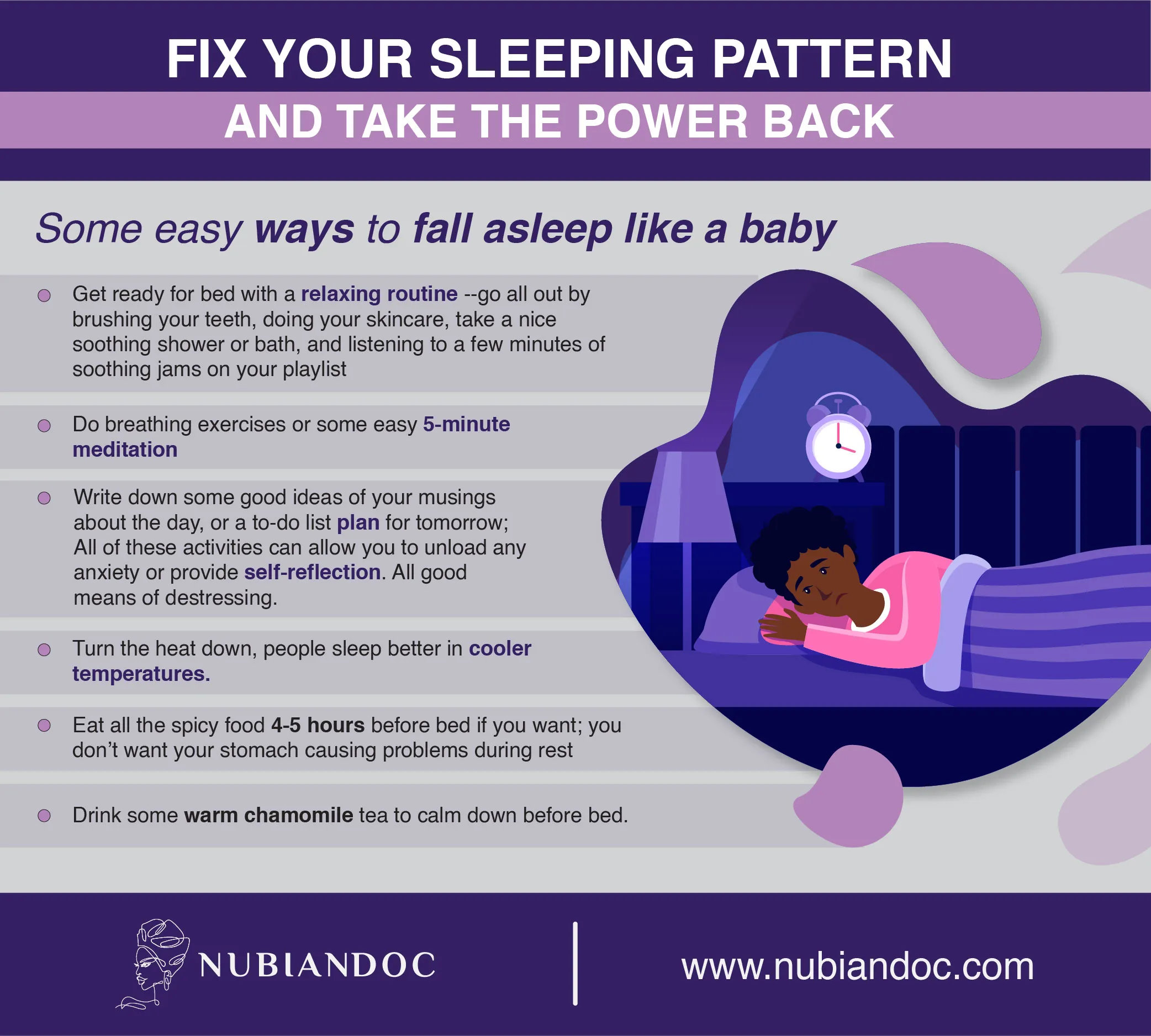
- Consistent sleep and wake times. Your body’s circadian rhythm — its internal clock — is powerful and trainable. Getting up at the same time every day, even on weekends, is one of the most effective things you can do to regulate your sleep cycle. This matters more than the time you go to bed.
- Exercise — but timing matters. Regular aerobic exercise improves sleep quality significantly. Johns Hopkins Medicine recommends 30 minutes of moderate aerobic exercise in the morning or early afternoon. Exercising within 2–3 hours of bedtime raises core temperature and keeps many people awake.
- Caffeine cutoff. Caffeine has a half-life of approximately 5–7 hours — meaning half the caffeine from your 3pm coffee is still circulating at 8 or 9pm. Most sleep physicians recommend stopping caffeine by noon or 1pm if sleep is a concern.
- Screens and blue light. The blue light emitted by phones, tablets, and computers suppresses melatonin — the hormone that signals your body it’s time to sleep. Turning off devices at least one hour before bed is a well-supported recommendation.
- Don’t look at the clock. When you wake in the middle of the night, avoid checking the time. As sleep expert Dr. Michelle Drerup explains, the moment you see that number, your brain begins calculating — how long you’ve been awake, how much sleep you’ll get before your alarm, what you have to do tomorrow. That mental math is the opposite of conditions for falling back asleep.
- Pre-sleep wind-down. A consistent wind-down routine — reading, a warm bath, light stretching, journaling — signals to your nervous system that the workday is over and rest is beginning. For women carrying the mental load of careers, households, and community, this transition is not automatic. It needs to be built intentionally.
- Make time for downtime. This one goes beyond sleep hygiene. Black women are disproportionately likely to carry caregiving responsibilities, emotional labor, and the cultural weight of needing to appear strong at all times. Rest is not laziness. Rest is medicine. Build it into your schedule the way you would a medical appointment — because that’s exactly what it is.
When to Address Sleep Apnea
If you snore, wake with headaches, experience excessive daytime sleepiness despite adequate hours in bed, or have a partner who notices you stop breathing during sleep — please pursue a formal sleep study. Sleep apnea is treatable, most commonly with a CPAP (Continuous Positive Airway Pressure) device that keeps the airway open during sleep. The difference in how patients feel after treating sleep apnea effectively is often dramatic.
Medication — Carefully and Temporarily
If behavioral approaches aren’t enough, medication may have a role — but it should be approached carefully. The American College of Physicians recommends that sleep medications be used for no longer than four to five weeks while CBT-I skills are being built, and that physicians first rule out treatable underlying causes including depression, pain, sleep apnea, and restless legs syndrome.
The medication classes commonly used include:
- Melatonin agonists (helpful for circadian rhythm disruption, generally safe)
- Non-benzodiazepine hypnotics (e.g., zolpidem — effective short-term, risk of dependency with longer use)
- Benzodiazepines (effective but carry higher risk of dependence and cognitive side effects, especially in older adults)
- Orexin receptor antagonists (a newer class with a favorable safety profile)
- Off-label options (e.g., low-dose trazodone, doxepin)
- Over-the-counter options (antihistamine-based aids — not recommended for regular use due to tolerance and residual sedation)
As for herbal remedies like valerian root — the evidence does not support routine use, and I would not recommend relying on them in place of evidence-based treatment.
Always discuss medication options with your physician before starting — particularly if you are taking other medications, have liver or kidney concerns, or are managing a mental health condition.
A Note on Therapy and Mental Health
If stress, anxiety, trauma, or depression are driving your sleep problems — and for many Black women, they are — addressing those root causes directly is as important as any sleep-specific intervention. Therapy, particularly cognitive behavioral approaches, is effective. The Superwoman Schema — the expectation that we must carry everything without complaint — is not a personality trait. It is a cultural survival strategy that has a real physiological cost. You are allowed to put it down, especially in the context of your own health.
The Bottom Line
Sleep is not optional. It is foundational to every other aspect of your health — your heart, your metabolism, your brain, your immune system, your mood, and your longevity. And for Black women specifically, the barriers to good sleep are real, documented, and deserving of the same clinical seriousness we give to any other risk factor.
If you’ve been managing on 5 or 6 hours and telling yourself you’re fine — I need you to hear this: you are likely not fine. Your body is managing, which is not the same thing.
Value your sleep. Advocate for it with your doctor. If your sleep concerns have been dismissed, push back or find a physician who takes them seriously. And if you want personalized guidance, I’m here.
Have questions about your sleep? Contact NubianDoc here. Subscribe to our newsletter for health guidance written with you in mind.
