

The Data: Mental Health in the United States
The CDC reports that 1 in 5 U.S. adults experiences at least one mental health condition in any given year — making mental illness one of the most prevalent public health challenges we face. Among women, the numbers are striking: according to CDC data, depression affects women at nearly 60% higher rates than men, and women are disproportionately affected by anxiety disorders and PTSD.
Mental health conditions are not a personal failing or a sign of weakness. They are medical conditions — shaped by biology, life experience, socioeconomic factors, trauma, and neurochemistry — that respond to treatment when caught early.

Why This Hits Different for Black Women
Here is what the data does not always capture: Black women carry a unique and compounded mental health burden that the mainstream conversation frequently overlooks.
Published research has consistently identified the “Strong Black Woman” persona as a significant barrier to seeking mental health care. This cultural script — the expectation that Black women should be endlessly resilient, self-sacrificing, and emotionally contained — does not protect us. It silences us.
Black women often navigate systemic racism and daily microaggressions that wear them down, while simultaneously managing internalized pressures and fears in silence. As Main Line Health’s Women’s Emotional Wellness Center documents, many Black women are suffering in silence — living with depression, anxiety, unresolved trauma, and stress-related disorders without knowing who to turn to or how to ask for help.
The structural barriers compound this further. According to the American Psychiatric Association, Black clinicians represent only about 2% of practicing psychiatrists and 4% of psychologists — meaning most Black women who do seek care are unlikely to see a provider who shares their cultural context. When they do seek care, the system can fail them in another way: research shows Black women tend to be overdiagnosed with more severe diagnoses due to implicit bias, lack of cultural awareness, and absence of trauma-informed care.
According to the Office of Minority Health, in 2024, Black and African American adults were 36% less likely than U.S. adults overall to have received mental health treatment in the past year. This is not because we are less affected. It is because the system was not designed with us in mind — and because we have been taught to handle it alone.
This post is for every woman who has been told she is “too strong” to be struggling. You are not too strong. You are human.
What Is Mental Health — and What Is Mental Illness?
Mental health encompasses your emotional, psychological, and social well-being. It affects how you think, make decisions, handle stress, and relate to the people around you. Good mental health is not the absence of hard days — it is the capacity to navigate them without your functioning significantly deteriorating.
Mental illness, by contrast, is a clinical condition in which psychological symptoms become persistent, severe, and disruptive to daily life. The key distinction is duration and functional impact. Feeling anxious before a difficult conversation is normal. Anxiety so severe it prevents you from leaving your home, maintaining relationships, or doing your job — that is a disorder that warrants clinical attention.
Mental illness is not a personality trait, a character flaw, or a spiritual problem. It is a medical condition with recognized causes, established diagnostic criteria, and effective treatments.
Normal vs. Concerning: How to Tell the Difference
Everyone experiences sadness, worry, and low energy at times — this is part of being human, not a sign of mental illness. The clinical distinction comes down to three things:
- Duration — Has this been going on for more than two weeks?
- Severity — Is it getting worse rather than better?
- Function — Is it interfering with your ability to work, maintain relationships, or manage daily life?
If the answer to any of these is yes, what you are experiencing warrants clinical attention — not because something is wrong with you, but because effective help exists and you deserve access to it.
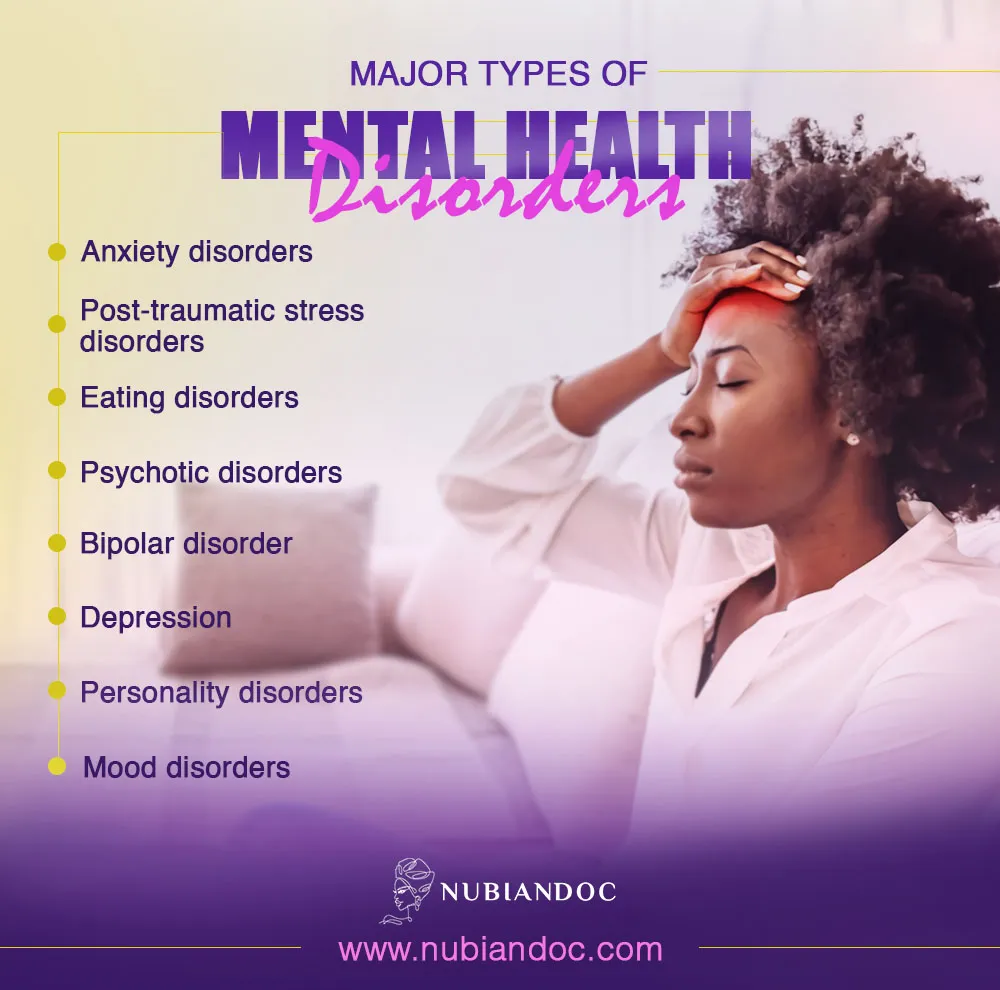
Common Mental Health Disorders: What They Actually Look Like
Depression
Depression is more than sadness. Clinically, it involves a persistent low mood lasting at least two weeks, often accompanied by loss of interest in things you previously enjoyed, changes in appetite or weight, disrupted sleep, fatigue, difficulty concentrating, feelings of worthlessness or guilt, and in more severe cases, recurrent thoughts of death or suicide. Symptom severity ranges widely — some people function on the outside while barely holding on inside. That functional facade is particularly common in Black women, who have often been rewarded for appearing fine.
Bipolar Disorder
Bipolar disorder is characterized by episodes of mania or hypomania — periods of abnormally elevated mood, increased energy, decreased need for sleep, impulsivity, and sometimes grandiosity — alternating with episodes of depression. There are two primary types: Bipolar I, which involves full manic episodes that can be severe enough to require hospitalization, and Bipolar II, which involves hypomania (a less intense form of mania) alongside depressive episodes.
Bipolar disorder is frequently misdiagnosed in Black women — often initially labeled as depression, which is particularly dangerous because antidepressants prescribed without a mood stabilizer can trigger a manic episode. Research shows Black patients are more likely to be misdiagnosed with schizophrenia rather than bipolar disorder, partly due to provider bias and the tendency to over-pathologize behavior in Black patients. An accurate diagnosis requires a thorough psychiatric history, including a careful look at any past periods of unusually elevated mood, reduced sleep, increased spending, or impulsive behavior — experiences that may have been previously dismissed or normalized.
Anxiety Disorders
Anxiety disorders are characterized by excessive, uncontrollable worry that is disproportionate to the situation and significantly impairs daily functioning. Generalized anxiety disorder, social anxiety disorder, panic disorder, and phobias all fall under this umbrella. Panic attacks — sudden episodes of intense physical symptoms including chest tightness, shortness of breath, sweating, and a sense of impending doom — are among the most distressing manifestations and are frequently misattributed to cardiac events.
Post-Traumatic Stress Disorder (PTSD)
PTSD deserves particular mention in any discussion of Black women’s mental health. Chronic exposure to racial trauma, discrimination, and community violence constitutes a real and accumulating traumatic burden. PTSD is not limited to combat veterans — it develops in response to any overwhelming traumatic experience and presents with flashbacks, hypervigilance, emotional numbness, and avoidance of triggers. Women are nearly three times more likely than men to develop PTSD in their lifetime.
Eating Disorders
While anorexia and bulimia are the most recognized, binge eating disorder is actually the most common eating disorder in the United States. It involves recurrent episodes of consuming unusually large amounts of food accompanied by a sense of loss of control and significant distress. Eating disorders in Black women have historically been underdiagnosed because providers have been less likely to screen for them — a gap with real clinical consequences.
Schizophrenia
Schizophrenia is a chronic, often severely disabling condition affecting less than 1% of the population. It involves psychosis — a break from reality — including delusions, disordered thinking, and hallucinations. It typically emerges in early adulthood and requires ongoing psychiatric management. It is worth noting that Black patients are disproportionately misdiagnosed with schizophrenia when they may actually have bipolar disorder or another mood condition — a disparity driven by implicit bias that has significant implications for treatment.
Warning Signs You Shouldn’t Ignore
Mental health symptoms can be subtle, especially when you have learned to mask them. Clinically, symptoms fall across four domains — and recognizing them in yourself or someone you love is the first step toward getting the right support.
Emotional
- Persistent sadness, emptiness, or hopelessness lasting more than two weeks
- Excessive worry, fear, or irritability that feels out of proportion to the situation
- Periods of unusually elevated or expansive mood — feeling abnormally “up,” wired, or invincible
- Feeling like a burden to others, or that things would be better without you
Behavioral
- Withdrawal from people and activities you used to enjoy
- Using alcohol or substances to cope with emotional pain
- Impulsive or reckless behavior — spending, sexual decisions, substance use — that is out of character
- Difficulty maintaining work, school, or daily responsibilities
Cognitive
- Difficulty concentrating, remembering things, or making decisions
- Racing thoughts, talking faster than usual, or jumping between unrelated ideas
- Confused or disorganized thinking
Physical
- Significant changes in sleep — too much or too little
- Changes in appetite or weight without an intentional cause
- Persistent fatigue that rest does not relieve
- Unexplained physical complaints — headaches, stomach pain, chronic tension
🚨 When symptoms are urgent — seek help immediately:
- Thoughts of suicide or self-harm
- Hearing or seeing things others do not
- Feeling completely disconnected from reality
- Expressing hopelessness with no way out
The 988 Suicide and Crisis Lifeline is available 24/7. Call or text 988. You do not have to be in immediate danger to call — if you are struggling, this line is for you.
When Physical Symptoms Are Actually Mental Health Symptoms
One of the most under-discussed aspects of mental illness is how often it presents physically. Chronic headaches, gastrointestinal symptoms, persistent fatigue, chest tightness, and unexplained pain are all recognized somatic manifestations of anxiety and depression. If you have been to multiple providers for physical complaints without a clear diagnosis, it is worth asking whether mental health could be a contributing factor. This is not dismissing your symptoms — it is expanding the diagnostic lens.
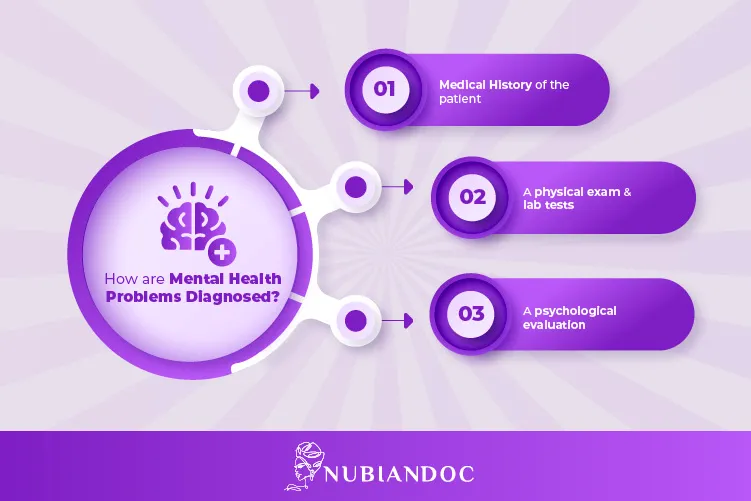
Getting a Diagnosis: What to Expect
Your primary care physician is a reasonable and accessible starting point. A good family physician will conduct a structured mental health screening, review your history, rule out medical contributors — thyroid dysfunction and vitamin deficiencies, for example, can mimic depression — and either initiate treatment or refer appropriately.
Online quizzes and self-assessments can help you identify and articulate your symptoms, but they are not diagnostic tools. A clinical evaluation by a trained provider remains the standard of care.
A note specifically on bipolar disorder: because its depressive episodes are often what prompt someone to seek care, bipolar disorder is routinely misidentified as depression alone. If you have ever experienced periods of unusually high energy, little need for sleep, rapid thinking, or impulsive behavior — even if they felt good at the time — tell your provider. This history significantly changes both the diagnosis and the treatment approach.
If you have had negative experiences with providers in the past — and many Black women have, for good reason — it is worth seeking out a culturally competent provider or one who specializes in working with women of color. The NAMI helpline (1-800-950-6264) and the Therapy for Black Girls directory are practical starting points.
Treatment Options That Work
Mental health treatment is not one-size-fits-all, and finding the right approach may take time.
Psychotherapy is the foundation of most mental health treatment. Cognitive Behavioral Therapy (CBT) has the strongest evidence base for depression and anxiety. Dialectical Behavior Therapy (DBT) is particularly effective for emotional dysregulation. Exposure therapy is first-line for PTSD and phobias. Culturally adapted therapy — which explicitly incorporates the patient’s racial and cultural identity — has been shown to improve outcomes for Black women specifically.
Medication is appropriate for moderate to severe depression, anxiety disorders, bipolar disorder, and other conditions, either alone or in combination with therapy. For bipolar disorder specifically, mood stabilizers — not antidepressants alone — are the cornerstone of treatment. Prescribing an antidepressant without first ruling out bipolar disorder can destabilize mood and trigger a manic episode, which is why an accurate diagnosis matters so much before treatment begins. Ambivalence about psychiatric medication is common and understandable — if you have concerns, discuss them openly with your provider.
Community and peer support — including faith communities, support groups, and trusted relationships — play a meaningful role in mental health recovery, particularly in Black communities where these networks are often the first point of contact.
Telehealth has significantly expanded access to mental health care and removed many of the logistical barriers that previously made care unattainable. If in-person care feels inaccessible, virtual options are a legitimate and effective alternative.
How to Support Someone You Love
If someone close to you is struggling, the most powerful thing you can do is show up without an agenda. Practically, that looks like:
- Listening without immediately trying to fix or minimize
- Expressing concern directly: “I’ve noticed you haven’t seemed like yourself — I care about you and I’m here”
- Helping them navigate practical barriers — finding a provider, making a call, accompanying them to an appointment
- Validating their experience rather than offering toxic positivity (“everything happens for a reason” is not support)
- Reminding them, gently and repeatedly, that what they are experiencing is treatable
- Educating yourself — NAMI offers excellent resources specifically for family members and caregivers
What not to do: pressure, shame, or suggest that prayer, exercise, or positive thinking alone will resolve a clinical mental health condition. These things can support wellness — they are not a substitute for care.
How to Start the Conversation
Sometimes the hardest part is finding the words. Here are some you can borrow:
- “I’ve been worried about you. Can we talk?”
- “You don’t have to be okay right now. I’m not going anywhere.”
- “I’m not here to fix anything. I just want to understand what you’re going through.”
- “Would it help if I looked into some resources with you?”
- “Have you talked to anyone — a doctor, a therapist — about how you’ve been feeling?”
When you are having this conversation: choose a private, comfortable setting. Follow the person’s lead on pacing. And if they shut down, leave the door open — one conversation is rarely enough, but it plants a seed.
Frequently Asked Questions
How do I know if what I’m feeling is a mental health issue or just stress?
- Stress is a normal response to difficult circumstances and typically improves when the stressor resolves. A mental health condition is different: symptoms persist beyond the triggering event, worsen over time, or begin to interfere with your ability to work, maintain relationships, or function in daily life. The key indicators clinicians look for are duration (more than two weeks), severity, and functional impact. If you are asking this question, it is worth talking to a provider.
Can mental health symptoms go away on their own?
- Mild symptoms sometimes improve with rest, social support, and stress reduction. But persistent symptoms — particularly depression, anxiety disorders, and anything involving thoughts of self-harm — rarely resolve without intervention and often worsen without treatment. Early care produces significantly better outcomes than waiting until symptoms become severe.
I’ve had periods of feeling really “up” and energized, not just depressed. Does that mean anything?
- It may. Alternating periods of depression with periods of unusually elevated energy, decreased need for sleep, or impulsive behavior can be a sign of bipolar disorder rather than depression alone. This distinction matters enormously because the treatment approach is different — and antidepressants prescribed without a mood stabilizer can actually destabilize mood in someone with bipolar disorder. If this pattern sounds familiar, share it with your provider explicitly.
Why do so many Black women wait so long to seek help?
- The barriers are real and well-documented: the “Strong Black Woman” cultural expectation, mental health stigma within Black communities, historical and ongoing mistrust of the healthcare system, lack of access to culturally competent providers, and financial barriers including being uninsured or underinsured. These are systemic issues — not personal failures. Knowing the barriers exist is the first step to working around them.
What if I don’t want to take medication?
- Medication is one tool — not the only one. Psychotherapy, particularly Cognitive Behavioral Therapy (CBT), has strong evidence for depression and anxiety and is effective without medication for many people. That said, for moderate to severe conditions, a combination of therapy and medication typically produces better outcomes than either alone. Have an honest conversation with your provider about your concerns — a good clinician will work with your preferences, not around them.
What’s the difference between a psychiatrist, a psychologist, and a therapist?
- A psychiatrist is a medical doctor (MD or DO) who specializes in mental health and can prescribe medication. A psychologist holds a doctoral degree (PhD or PsyD) and provides therapy and psychological testing but typically cannot prescribe medication. A therapist or counselor holds a master’s degree (LCSW, LPC, LMFT) and provides talk therapy. Your primary care physician can often be a good starting point — they can screen, diagnose common conditions, prescribe when appropriate, and refer to the right specialist.
Where can I find a therapist who understands my experience as a Black woman?
- Therapy for Black Girls and Therapy for Black Men both maintain searchable directories of culturally competent therapists. NAMI (1-800-950-6264) can also help connect you to local resources. Telehealth platforms have expanded access significantly — location is no longer the barrier it once was.
The Bottom Line: Strength Includes Asking for Help
Mental illness is common, it is treatable, and it does not discriminate. What does discriminate is access to care — and for Black women, the barriers are real, documented, and systemic.
Choosing to seek help is not weakness. It is one of the most courageous and self-affirming decisions you can make. The Strong Black Woman who refuses to ask for help is not thriving — she is surviving. And you deserve more than survival.
If you are struggling, please reach out. To a doctor. To a therapist. To someone you trust. To the 988 Lifeline. You do not have to carry this alone.
