
Cardio or strength? It’s one of the most common exercise questions I get from women in my practice. The short answer is you don’t have to choose. The longer answer — what each one actually does for your body, how much you genuinely need, and what the latest research says about exercise for women specifically — is what this post is about.
Most women I talk to have already found something that works. A 45-minute morning walk. A YouTube strength routine three times a week. You’re consistent, you’re showing up, and that matters enormously. But at some point you’ve probably asked yourself: Am I doing the right kind of movement? And is doing the same thing every day actually helping me?
Both are fair questions, and clinically important ones. Here’s what the science actually says.
Why Exercise Matters More Than You Might Realize — Especially for Women
Before we get into the mechanics of workout variety, I want to share something from a landmark 2024 study published in the Journal of the American College of Cardiology that every woman should know about.
Researchers at Cedars-Sinai analyzed data from more than 412,000 U.S. adults followed for over two decades and found that women derive significantly greater health benefits from the same amount of exercise as men. Specifically:
- Women who exercised regularly were 24% less likely to die from any cause — compared to 15% for men doing the same amount
- Women had a 36% reduced risk of fatal cardiovascular events — compared to just 14% for men
- Women needed only about 140 minutes per week of moderate aerobic activity to reach the same survival benefit it took men 300 minutes to achieve
- Weekly strength training reduced cardiovascular death risk by 30% in women versus 11% in men
The NIH-supported commentary on this study put it plainly: women are biologically primed to get more from exercise — and yet, only 33% of women in the study met weekly aerobic guidelines, and only 20% engaged in regular strength training. That gap has real consequences.
If you’re a woman who is doing something — you are already ahead. And if you’re not yet moving regularly, the return on a relatively small investment of time is extraordinary.
Cardio and Strength Training: What Each One Does
These two categories of exercise are not competing — they’re complementary. Understanding what each does for your body is the foundation for building a routine that actually serves you.
Cardio (Aerobic Exercise)
Cardio, also called aerobic or endurance exercise, is any activity that elevates your heart rate and keeps it elevated for a sustained period using large muscle groups rhythmically. Walking, jogging, cycling, swimming, dancing, hiking, and jump rope all count.
During cardio, your body relies primarily on oxygen to fuel energy production — which is why breathing harder is part of the experience. Over time, regular cardio makes your cardiovascular system more efficient: your heart pumps more blood per beat, your lungs exchange oxygen more effectively, and your muscles become better at using that oxygen. You feel less winded doing the same activity. That’s adaptation.
What cardio does for your health:
- Reduces risk of heart disease, stroke, and high blood pressure
- Improves HDL (“good”) cholesterol and lowers triglycerides
- Supports weight management through calorie burn and metabolic improvements
- Reduces chronic inflammation, which underpins most major chronic diseases
- Improves mood, reduces anxiety and depression
- Supports immune function
- Helps manage blood sugar and insulin sensitivity
Common cardio activities: Brisk walking, jogging, running, cycling, swimming, dancing, aerobics, water aerobics, jump rope, hiking, skating, team sports, stair climbing
High, low, and no impact: High-impact cardio (running, jumping) involves both feet leaving the ground. Low-impact (walking, hiking) keeps one foot grounded at all times — gentler on joints while still effective. No-impact (swimming, water aerobics) removes gravitational stress entirely, making it ideal for those with joint conditions or injuries.
Strength Training (Resistance Training)
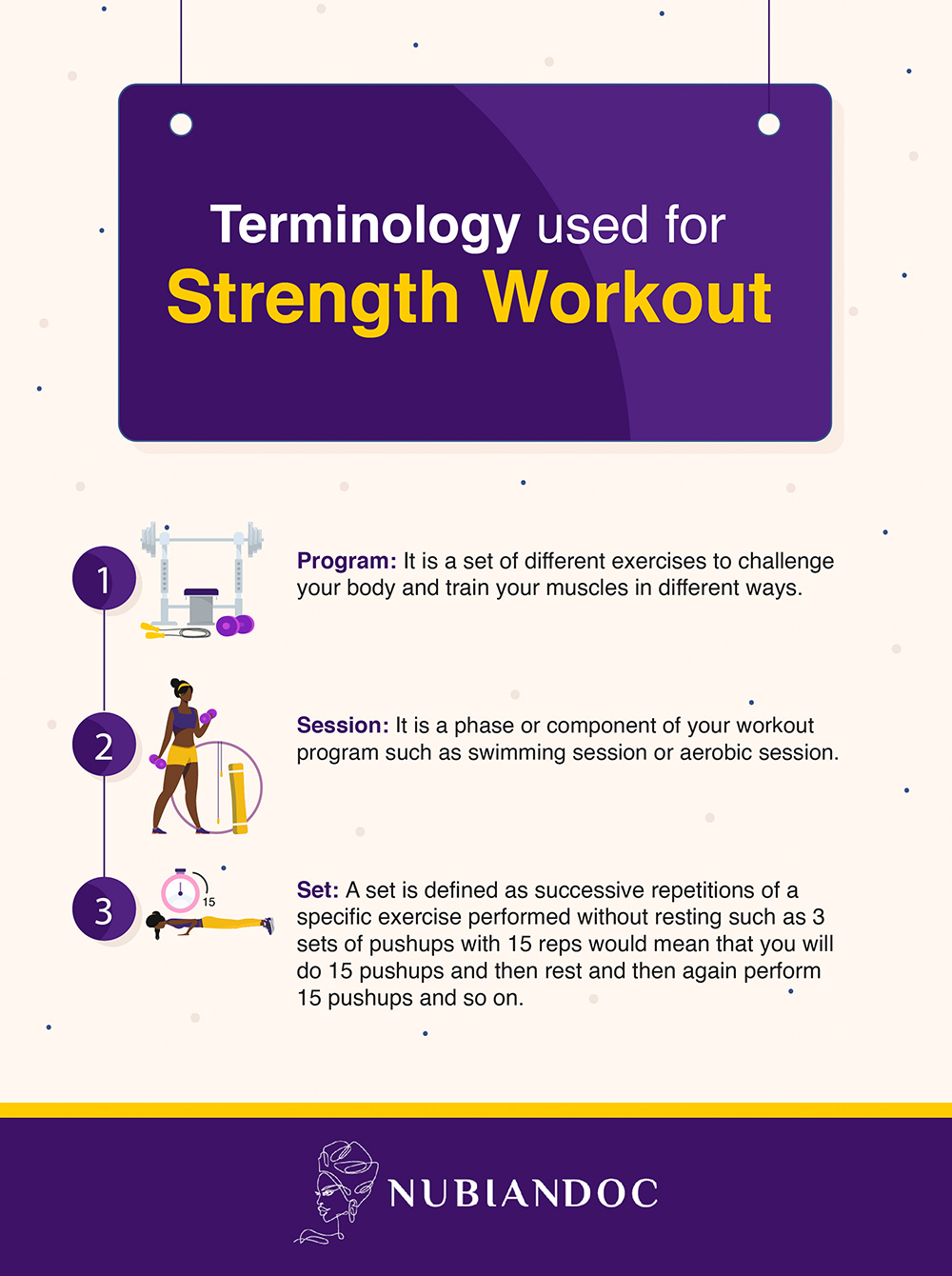
Strength training — also called resistance training or weight training — uses muscular force against resistance to build strength, muscle mass, and functional capacity. The resistance can come from free weights, machines, resistance bands, or your own body weight (push-ups, squats, planks).
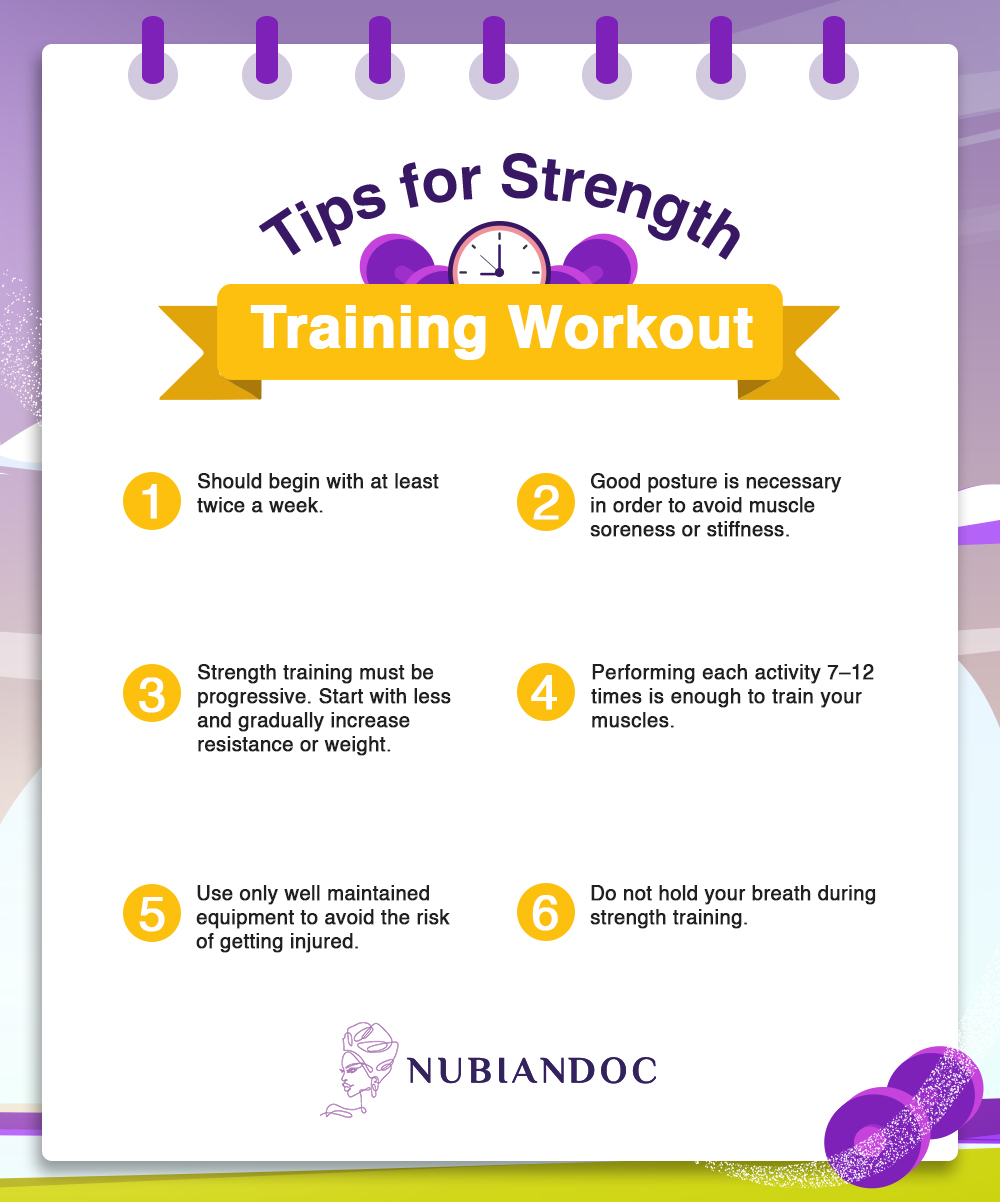
The key mechanism is progressive overload: progressively increasing the challenge to your muscles over time, which signals the body to build more muscle tissue and increase neural efficiency. Without progressive overload, your body adapts to the current stimulus and stops changing — more on that below.
What strength training does for your health:
- Builds and preserves lean muscle mass, which naturally declines with age
- Increases bone density, reducing fracture risk — critical for women, who are disproportionately affected by osteoporosis
- Improves balance, coordination, and fall prevention as you age
- Boosts resting metabolism (muscle tissue burns more calories at rest than fat)
- Improves insulin sensitivity and blood sugar regulation
- Reduces joint pain and stiffness associated with arthritis
- Significantly reduces risk of cardiovascular death — more so in women than men, per the 2024 JACC data
- Reduces symptoms of depression and anxiety — 2024 meta-analyses found strength training as effective as psychotherapy for mild to moderate depression
- Improves sleep quality
Common strength exercises: Weight lifting (barbells, dumbbells, kettlebells), resistance band work, body weight exercises (push-ups, squats, lunges, planks), yoga, Pilates, hill walking, functional movement training
The Current Exercise Guidelines
The Physical Activity Guidelines for Americans from the U.S. Department of Health and Human Services recommend:
- At least 150–300 minutes per week of moderate-intensity aerobic activity (e.g., brisk walking), OR 75–150 minutes per week of vigorous-intensity aerobic activity (e.g., running), OR an equivalent combination of both
- Muscle-strengthening activities (resistance training) involving all major muscle groups on at least 2 days per week
- Reduced sedentary time — even light movement throughout the day has independent health benefits
The 2024 JACC research suggests these guidelines may eventually be updated with sex-specific recommendations, given that women reach equivalent benefits in roughly half the time. The message for you: don’t let the standard 150-minute benchmark feel daunting. Getting to 140 minutes of moderate movement per week produces substantial protection — and more is even better.
So: Is Doing the Same Workout Every Day a Problem?
The short answer is: it depends on what you’re doing and whether you’re applying progressive overload — but for most people, repeating the exact same workout indefinitely will eventually stall your progress and potentially increase your injury risk.
Here’s the physiology behind why.
Your Body Adapts — That’s the Goal, and Also the Problem
The human body is remarkably adaptive. When you begin a new exercise — say, a 30-minute walk or a 3-set squat routine — your muscles, cardiovascular system, and nervous system are challenged. Your body responds by making adaptations: building muscle, improving cardiovascular efficiency, strengthening connective tissue.
But once your body has adapted to a given stimulus, that same stimulus no longer creates the same challenge. The workout that once left you winded becomes routine. The weights that once felt heavy feel manageable. This is called a plateau — and it’s not a failure of willpower, it’s a physiological reality.
A 2024 randomized controlled trial confirmed that muscle and strength gains require progressive overload — a systematic increase in challenge over time, whether through heavier weight, more repetitions, more sets, shorter rest intervals, or more complex movements. Without it, training stimulus is insufficient to drive continued adaptation.
Overuse Injuries: The Repetitive Strain Risk
Performing the exact same movements, on the same muscles, in the same planes of motion, day after day without variation creates disproportionate stress on specific muscle groups, tendons, and joints. The result is repetitive strain injury — a spectrum that ranges from tendinitis and stress fractures to more serious structural damage.
Common examples include runner’s knee from daily running on the same terrain, rotator cuff strain from repeating the same shoulder exercises, and shin splints from the same high-impact cardio routine. These injuries are largely preventable with variety, rest days, and cross-training.
Muscle Recovery Is Where Growth Happens
This is one of the most misunderstood principles in fitness: your muscles don’t grow during exercise — they grow during recovery. When you perform resistance training, you create microscopic damage to muscle fibers. During the 24–72 hours after training, your body repairs those fibers and rebuilds them slightly stronger. If you train the same muscle group again before that repair process is complete, you interrupt the growth cycle and accumulate fatigue instead.
This is why most evidence-based strength programs prescribe 48 hours of rest between sessions targeting the same muscle groups — not because rest is weakness, but because rest is where the results actually come from.
How Often Should You Switch Up Your Routine?
General guidance is to progress or vary your workout every 3–4 weeks — not because novelty for its own sake is the goal, but because that’s approximately how long it takes for most people to fully adapt to a given training stimulus and need a new challenge.
Variation doesn’t mean completely overhauling your routine. It can mean:
- Adding weight (even 2–5 lbs) to a strength exercise
- Increasing reps or sets for the same movement
- Shortening rest periods between sets
- Changing the exercise variation (e.g., swapping barbell squats for split squats)
- Adding a new modality (e.g., adding two strength sessions if you’ve only been doing cardio)
- Changing your cardio format (e.g., adding interval work to your steady-state walks)
The NASM principle of progression recommends keeping weekly increases in load or intensity to no more than 10% to allow safe adaptation while minimizing injury risk.
Cycle Syncing: Adapting Exercise to Your Hormonal Cycle
For women who are menstruating, the menstrual cycle creates real fluctuations in energy, strength, and recovery capacity — and there is growing evidence that aligning exercise intensity with hormonal phases can optimize performance and reduce discomfort.
- Menstrual phase (Days 1–5): Estrogen and progesterone are at their lowest. Energy may be reduced. Low-impact activity — walking, gentle yoga, stretching — is often most appropriate. Some women find exercise reduces cramping by lowering prostaglandin levels; listen to your body.
- Follicular phase (Days 6–13): Rising estrogen supports higher energy and better muscle recovery. This is often the best phase for progressive strength work and higher-intensity cardio.
- Ovulatory phase (Day 14): Peak estrogen and testosterone create a natural window of strength and power. Good time for challenging lifts or interval training. Note: estrogen also increases ligament laxity slightly, so warm-up and form are especially important.
- Luteal phase (Days 15–28): Progesterone rises. Core temperature is slightly higher. Many women find endurance easier than explosive power in this phase. Moderate intensity, consistent nutrition, and adequate rest support best performance.
This is not a rigid prescription — it is context. Every woman’s experience is different, and conditions like fibroids, PCOS, or endometriosis may significantly alter what feels right across the cycle.
Building a Balanced Weekly Routine
For most women without specific training goals or medical restrictions, a week that includes both cardio and strength training — with adequate rest — will produce better results than either alone.
A practical framework:
| Day | Activity |
|---|---|
| Monday | Strength training (upper body focus) |
| Tuesday | Moderate cardio (30–45 min walk, bike, swim) |
| Wednesday | Strength training (lower body focus) |
| Thursday | Active recovery (light walk, yoga, stretching) |
| Friday | Strength training (full body or core) |
| Saturday | Cardio of choice — longer, lower intensity |
| Sunday | Rest |
This structure hits the CDC’s muscle-strengthening recommendation (2–3 days), meets weekly aerobic minutes, and builds in recovery. It is a framework, not a mandate — adapt it to your schedule, energy, and what you genuinely enjoy.
What you enjoy matters clinically. Adherence is the most important predictor of long-term outcomes in exercise research. A routine you will actually do for years beats the objectively “optimal” program you abandon after three weeks.
What About Daily Exercise?
Daily movement is not the problem — daily high-intensity exercise of the same type without adequate recovery is the problem. There is a meaningful difference between:
- Daily low-intensity movement (walks, stretching, yoga) — generally fine and beneficial
- Daily moderate cardio of the same type — manageable for many people, but watch for signs of overtraining
- Daily high-intensity or heavy strength training of the same muscle groups — problematic for recovery and injury risk
If you love walking every day, keep walking. If you want to run every day, build to it gradually with rest days, route variation, and cross-training. If you’re strength training, rotate muscle groups so no single group is trained on consecutive days.
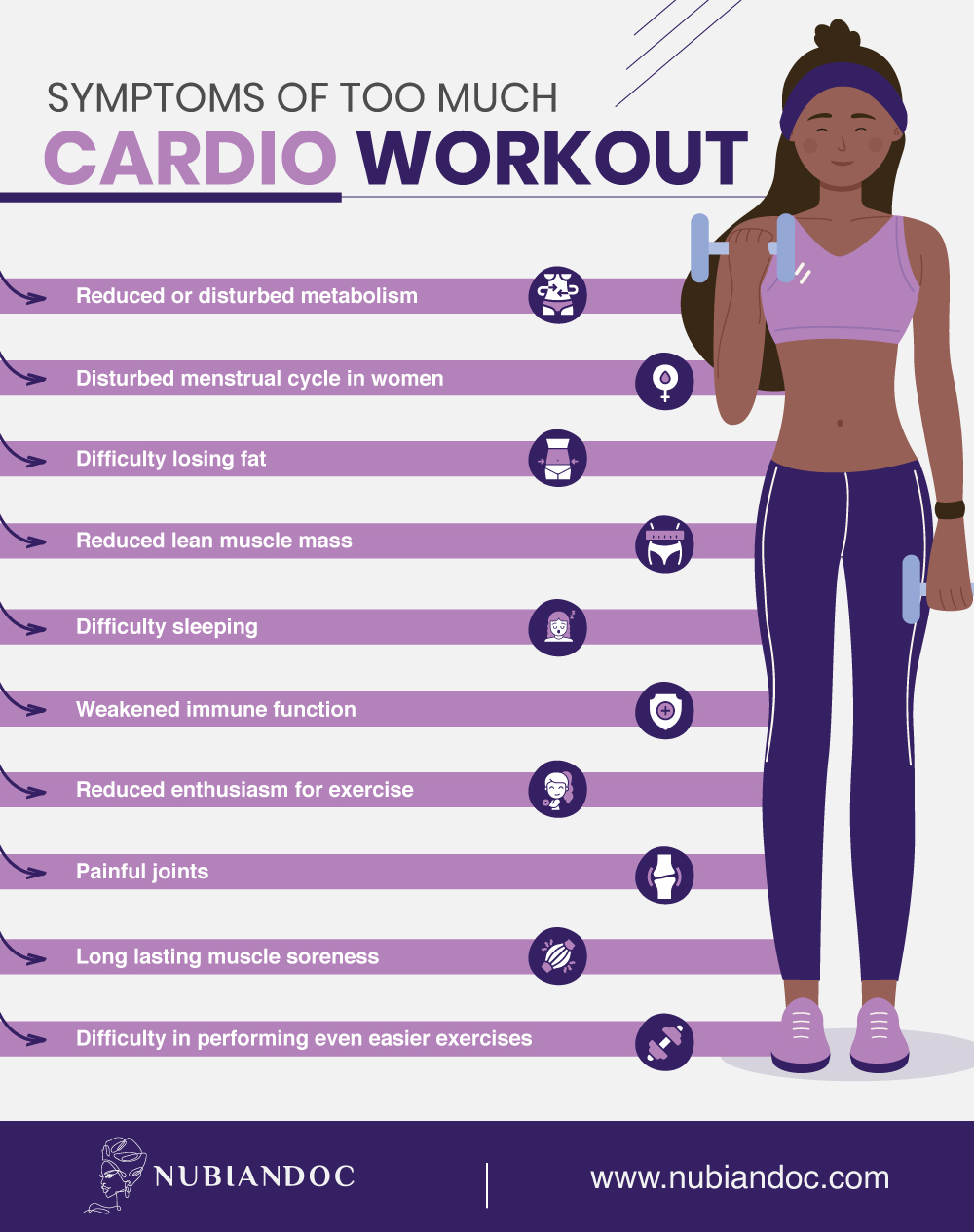
Signs you may be overtraining: persistent fatigue that doesn’t improve with rest, declining performance, increased injury occurrence, disrupted sleep, mood changes, or loss of motivation. If these appear, a scheduled deload week — reducing volume and intensity by 40–60% — is appropriate before resuming normal training.
A Note on Bone Health and Aging
This deserves its own emphasis, particularly as women approach and move through perimenopause. Bone density peaks in early adulthood and declines with age — accelerating sharply in the years around menopause due to estrogen reduction. Osteoporosis affects an estimated 10 million Americans, and women account for 80% of those cases.
Weight-bearing and resistance exercise are two of the most powerful tools available for preserving and building bone density. The stress placed on bone through resistance training stimulates osteoblast activity — the cells responsible for laying down new bone. Even if you’re already in your 40s, 50s, or beyond, it is not too late. Research confirms that resistance training increases bone mineral density in postmenopausal women.
This is a reason to strength train that goes beyond aesthetics or weight. It is about maintaining the structural integrity of your body for the decades ahead.
The Bottom Line
Both cardio and strength training offer profound, evidence-based health benefits — and women in particular stand to gain substantially from both, with the 2024 JACC data showing that the same amount of exercise produces proportionally greater reductions in mortality and cardiovascular death in women than in men.
The case against doing the exact same workout every day is not that consistency is bad — consistency is essential. It’s that your body requires progressive challenge to keep adapting, recovery time to rebuild and grow, and variety to protect against overuse injuries and muscular imbalance.
Move in ways you enjoy. Build in strength training at least twice a week. Vary intensity and format over time. Rest with intention. And know that every minute you invest in movement is returning significant dividends on your long-term health — more than you may realize.
For more on building a sustainable healthy lifestyle, read our posts on strength training and its benefits for mind and body, how to maintain a healthy weight, understanding your menstrual cycle, and what intermittent fasting actually does to your body.
References:
- Ji H, Gulati M, et al. Sex Differences in Association of Physical Activity With All-Cause and Cardiovascular Mortality. JACC. 2024;83(8):783–793.
- NHLBI/NIH. Women May Realize Health Benefits of Regular Exercise More Than Men. February 2024.
- U.S. Department of Health and Human Services. Physical Activity Guidelines for Americans, 2nd edition.
- NASM. Progressive Overload Explained.
- Healthline. 14 Benefits of Strength Training, Backed by Science. Updated 2024.
- Mayo Clinic. Bone Health: Tips to Keep Your Bones Healthy.
- CDC. Physical Activity Basics for Adults.
- Stimson AJ. Why don’t women engage in muscle strength exercise? An integrative review. Health Promotion Journal of Australia. 2024.
