

Few nutrition topics generate more confusion — or more conflicting headlines — than dairy. One week it’s a superfood. The next it’s linked to cancer. Your grandmother swore by a glass of warm milk at night. Your colleague gave it up entirely and says she’s never felt better.
So which is it?
As a physician, my answer is: it depends — and the honest answer is more nuanced than most wellness content lets on. The science on dairy is genuinely mixed, the research is evolving, and importantly, the question of whether dairy is “good” or “bad” for you is not the same question for everyone. For Black women in particular — who are disproportionately affected by lactose intolerance, vitamin D deficiency, and chronic conditions that dairy intake may either help or harm — this topic deserves a clear-eyed, individualized look.
This post gives you that look.
What Dairy Actually Is — And What’s in It
“Dairy” refers to foods derived from the milk of mammals — most commonly cows, but also goats, sheep, and buffalo. Common dairy products include milk, yogurt, kefir, cheese, butter, cream, and ice cream.
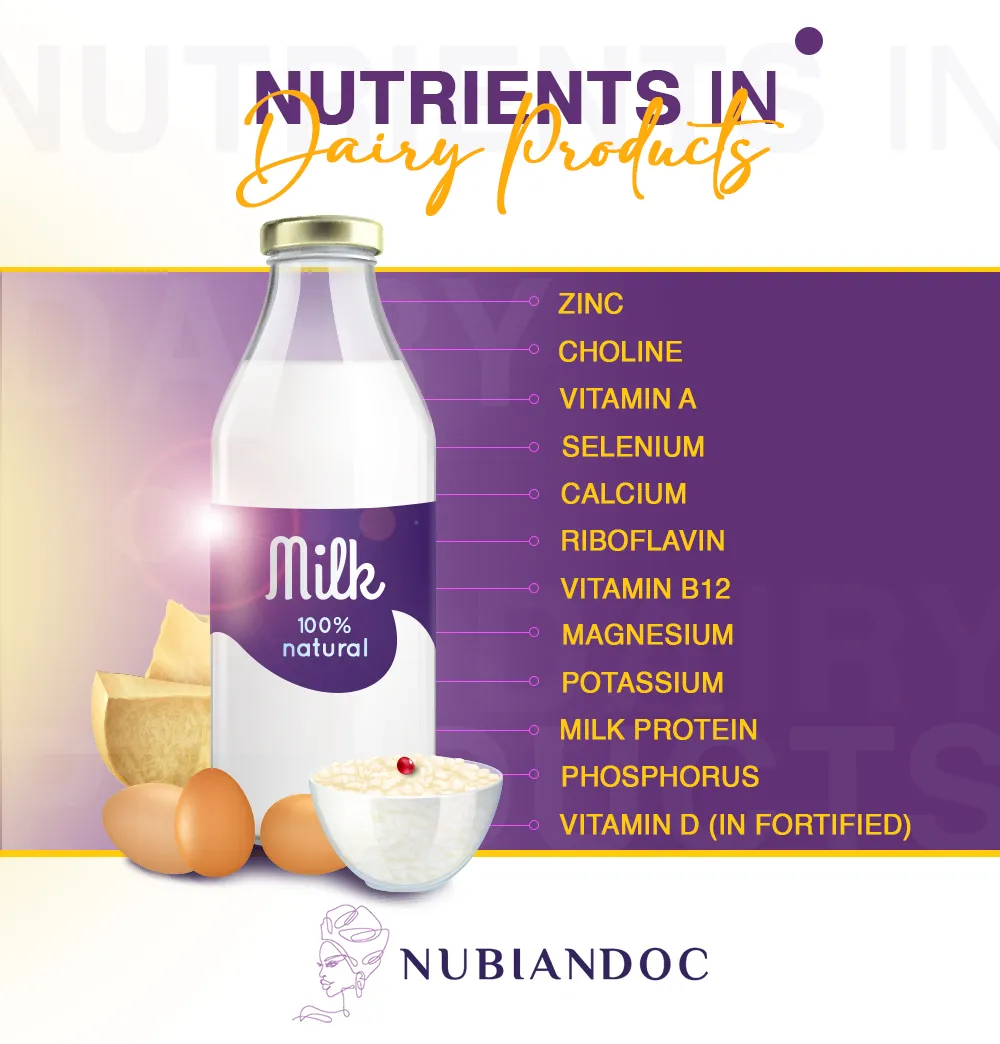
Nutritionally, dairy is genuinely dense. A single cup of whole milk contains:
- Protein — approximately 8 grams, including all essential amino acids
- Calcium — roughly 300 mg (about 23% of the daily recommendation for adults)
- Vitamin B12 — essential for nerve function and red blood cell production
- Phosphorus, potassium, magnesium, zinc, and selenium
- Vitamins A and D — both added through fortification in the U.S. since the 1930s to address bone disease from vitamin deficiency, not naturally occurring in significant amounts in most commercial milk
Milk also contains lactose — the natural sugar in dairy — which requires the enzyme lactase to be digested. This is where a significant portion of the complexity begins, and we will come back to it in detail.
What the Most Current Evidence Says
The scientific picture on dairy has become considerably clearer in the past two years, with several large, well-designed analyses helping to resolve some of the earlier contradictions.
Cardiovascular Health: Largely Reassuring — With Nuance
A 2025 umbrella review published in Nutrients — encompassing 33 meta-analyses and updated with data through 2024 — found that total dairy consumption was significantly associated with reduced cardiovascular disease risk (RR: 0.96), with yogurt showing the strongest protective association (RR: 0.92). Both total dairy and low-fat dairy were linked to reduced hypertension risk, and milk and low-fat dairy were associated with reduced stroke risk.
A January 2025 Nature Communications global analysis of data from the UK Biobank and China Kadoorie Biobank, complemented by a meta-analysis, found total dairy consumption associated with a 3.7% reduced risk of cardiovascular disease and a 6% reduced risk of stroke — with cheese and low-fat dairy products driving the most consistent inverse associations.
The nuance: These benefits are strongest for fermented dairy (yogurt, kefir, cheese) and low-fat options. Full-fat dairy results are more variable across populations, with some evidence suggesting neutral effects on cardiovascular outcomes in healthy adults, and other evidence — particularly in populations with higher baseline saturated fat intake — suggesting modest increases in LDL cholesterol. The food matrix matters: dairy fat does not appear to behave metabolically the same way as other sources of saturated fat, partly due to its calcium, protein, and fermentation-associated effects.
Bone Health: More Complex Than We Were Taught
Dairy is widely promoted as the primary dietary strategy for bone health, but the evidence here is more nuanced than the marketing suggests. The 2025 Nutrients umbrella review found that fermented dairy intake — particularly yogurt — was associated with reduced fracture risk (HR: 0.67 in a 30-year Danish cohort study). Calcium and vitamin D from dairy do support bone mineral density, particularly in childhood and adolescence when peak bone mass is established.
However, high milk intake alone in adulthood has not been consistently shown to prevent fractures in most large prospective studies. The bone-protective effects of dairy appear to be most meaningful earlier in life and in the context of overall dietary patterns — not as an isolated adult intervention. The European Journal of Clinical Nutrition 2025 scoping review concluded that dairy’s relationship with bone outcomes depends heavily on the type of dairy product, the population studied, and baseline nutrient status.
The bottom line for bone health: Dairy is a useful source of calcium, but it is not the only one — and optimal bone health also requires adequate vitamin D (often deficient, especially in women with darker skin tones), weight-bearing exercise, and adequate protein intake. See our post on vitamin supplementation for more on vitamin D testing and supplementation.
Cancer: Where the Signal Is More Concerning
This is the area of dairy research where legitimate caution is warranted, and where the original post’s concern was directionally correct.
Multiple systematic reviews and the World Cancer Research Fund have found associations between high dairy consumption — particularly high-fat dairy and high total milk intake — and increased risk of breast cancer and prostate cancer. The proposed mechanisms include elevated insulin-like growth factor-1 (IGF-1), which promotes cell proliferation, and — for hormone-responsive breast cancer — potential interaction with estrogen pathways.
The 2025 European Journal of Clinical Nutrition scoping review confirms mixed but concerning signals for breast cancer at high intake levels, while noting that the evidence for colorectal cancer protection is actually among the more consistent positive findings — with higher dairy intake associated with reduced colorectal cancer risk across multiple studies.
Clinically practical framing: Moderate dairy consumption (1–2 servings per day) does not appear to carry the same signal as high intake (3+ servings, particularly of full-fat or processed varieties). Fermented dairy (yogurt, kefir) consistently shows the most favorable risk profiles across outcomes. If you have a personal or family history of hormone-sensitive breast cancer, this is a reasonable area to discuss with your physician.
Diabetes and Metabolic Health
Several large cohort studies and meta-analyses have found dairy consumption — particularly yogurt and low-fat dairy — associated with reduced risk of type 2 diabetes. This finding is consistent enough across populations that it appears in the USDA Dietary Guidelines for Americans 2020–2025 as a positive association. The proposed mechanism involves dairy’s combination of protein, calcium, magnesium, and fermentation-associated bacteria affecting insulin sensitivity and glycemic regulation.
This is particularly relevant given the disproportionate burden of type 2 diabetes and prediabetes in our community — making the metabolic benefits of appropriately chosen dairy products clinically meaningful rather than abstract.
Lactose Intolerance: What You Need to Know — And Why It Matters for You
This is where the conversation becomes most directly relevant to this audience.
Approximately 75% of African Americans have lactase nonpersistence — meaning their bodies reduce production of the enzyme lactase after early childhood, making it progressively harder to fully digest the lactose in dairy. This is a genetic trait tied to ancestral regions where dairy herding was historically limited. It is not a disease — it is a normal human variant that affects the majority of the world’s population outside of northern and western European descent.
Research confirms that Black adults consume, on average, half the recommended daily servings of dairy — primarily because of lactose intolerance and the discomfort it causes. The downstream consequence is lower intakes of calcium, vitamin D, potassium, and other nutrients that dairy provides — and all three of those nutrients are already identified as nutrients of public health concern in the U.S. population. For Black women specifically, this intersects with an already elevated risk of vitamin D deficiency, documented at over 80% insufficiency in some studies, and higher rates of hypertension, where calcium and potassium intake are protective.
This doesn’t mean you need to push through dairy discomfort. It means choosing your dairy sources strategically, and ensuring you are getting these nutrients from somewhere.
Lactose Intolerance vs. Dairy Allergy — The Clinical Difference
These two conditions are frequently confused but are physiologically distinct:
Lactose intolerance involves the digestive system. Without adequate lactase, undigested lactose travels to the colon where bacteria ferment it, producing gas, bloating, cramping, and diarrhea. It is uncomfortable but not dangerous, and the threshold varies — most people with lactose intolerance can tolerate small amounts of lactose, particularly when consumed with food.
Dairy allergy involves the immune system. The body mounts an allergic response to proteins in dairy (primarily casein and whey), triggering reactions that range from hives, eczema, and gastrointestinal symptoms to anaphylaxis in severe cases. Dairy allergy is most common in young children — affecting roughly 2–3% of those under age 3 — and most outgrow it. True dairy allergy in adults is less common than lactose intolerance, though more serious when present.
| Lactose Intolerance | Dairy Allergy | |
|---|---|---|
| System involved | Digestive | Immune |
| Cause | Insufficient lactase enzyme | Immune reaction to dairy proteins |
| Common in | Adults, especially in Black, Asian, and Latino populations | Young children primarily |
| Symptoms | Gas, bloating, cramping, diarrhea | Hives, wheezing, swelling, GI symptoms, potentially anaphylaxis |
| Risk level | Uncomfortable, not dangerous | Can be severe or life-threatening |
| Small amounts tolerated? | Usually yes | No — even trace amounts can trigger reaction |
Symptoms of lactose intolerance: bloating, gas, abdominal cramping, diarrhea, nausea — typically within 30 minutes to 2 hours of consuming lactose-containing foods.
Symptoms of dairy allergy requiring prompt attention: hives or skin rash, wheezing or difficulty breathing, swelling of lips, tongue or throat, vomiting, or loss of consciousness. If any of these occur, seek emergency care. An EpiPen may be necessary if a true dairy allergy has been diagnosed.
Is Lactose Intolerance Genetic?
Yes — lactase nonpersistence is genetically determined and tied to ancestral heritage. The gene variant that allows adults to continue digesting lactose (lactase persistence) evolved primarily in populations that relied on dairy herding for centuries — mainly northern Europeans and some East African pastoralist groups. Populations from sub-Saharan Africa, East Asia, South Asia, and Indigenous American backgrounds have high rates of lactase nonpersistence. This is not a disorder — it is ancestral biology.
Managing Lactose Intolerance: Practical Strategies
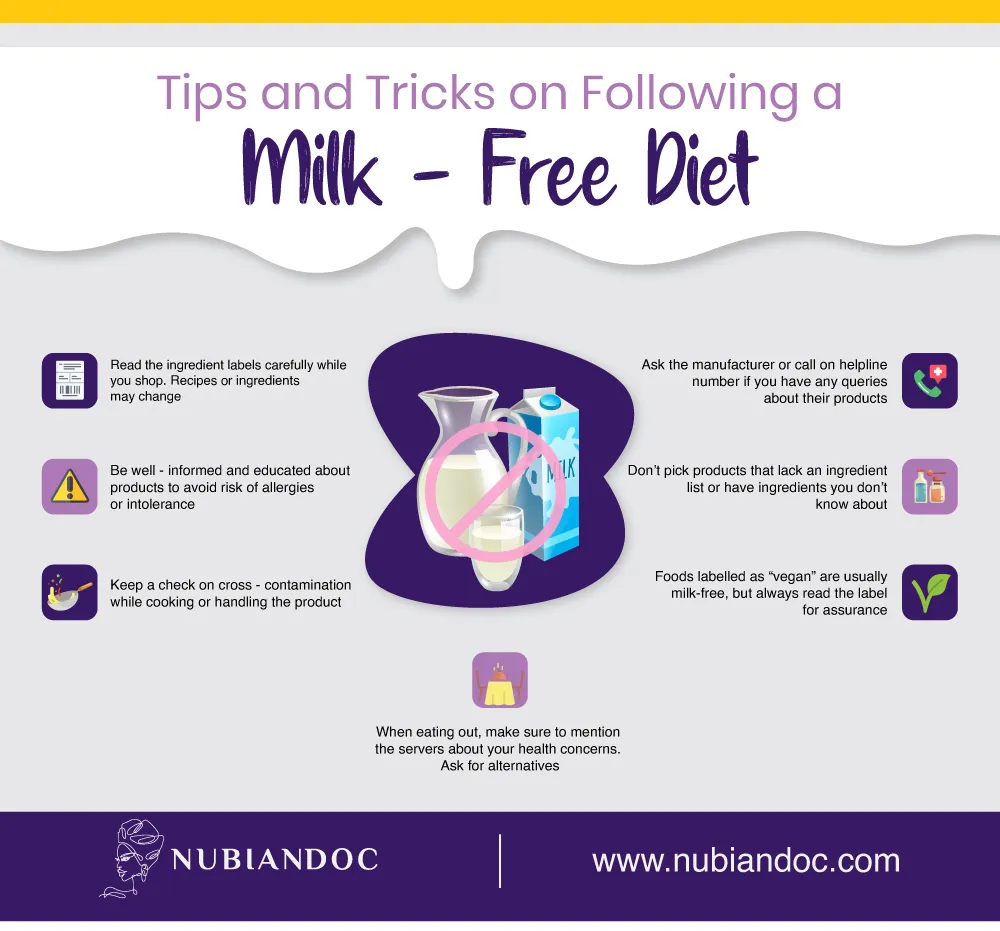
If you are lactose intolerant, complete dairy avoidance is not your only option — and given the nutrient implications discussed above, it may not be your best one.
Start with fermented dairy: Yogurt and kefir are your best friends here. The live bacterial cultures in yogurt produce their own lactase, partially pre-digesting the lactose before it reaches your intestine. Most people with lactose intolerance tolerate yogurt well. Research specifically recommends yogurt as a key strategy for Black women navigating lactose intolerance without sacrificing calcium and vitamin D intake.
Choose aged hard cheeses: The lactose content of cheese decreases significantly during the aging and fermentation process. Aged cheddar, Parmesan, Swiss, and Gouda contain very small amounts of lactose and are generally well tolerated.
Never consume dairy on an empty stomach: Eating dairy alongside other foods significantly slows gastric emptying and reduces the amount of lactose hitting the intestine at once — meaningfully reducing symptoms for most people.
Start small and build gradually: Many people with lactase nonpersistence can build tolerance over time by starting with small amounts and gradually increasing. The gut’s bacterial ecosystem adapts.
Use lactase enzyme supplements: Over-the-counter lactase supplements (Lactaid, Dairy Ease) taken just before consuming dairy replace the missing enzyme and reduce symptoms significantly for most people. This is a clinically reasonable strategy.
Try lactose-free dairy products: Lactose-free milk, yogurt, and cheese are real dairy products with the lactose pre-digested by added lactase enzyme. They retain the same nutritional profile as regular dairy without the digestive burden.
Consider goat’s milk: Goat’s milk has a slightly different protein structure and smaller fat globules than cow’s milk, which some people find easier to digest — though it still contains lactose.
Non-Dairy Alternatives: How They Compare
If you are avoiding dairy for any reason — lactose intolerance, dairy allergy, dietary preference, or environmental concerns — plant-based milks are a reasonable substitution, with some important caveats about nutrition.
| Alternative | Protein | Calcium | Key Notes |
|---|---|---|---|
| Soy milk | 7–8g/cup | Fortified ~300mg | Closest to cow’s milk nutritionally; complete protein |
| Oat milk | 2–4g/cup | Fortified ~350mg | Higher in carbohydrates; lower in protein |
| Almond milk | 1g/cup | Fortified ~450mg | Very low protein; high in vitamin E |
| Coconut milk (carton) | 0–1g/cup | Fortified ~450mg | Very low protein; high in saturated fat |
| Rice milk | 1g/cup | Fortified ~280mg | High glycemic index; lowest protein |
| Hemp milk | 3g/cup | Fortified ~280mg | Good omega-3 fatty acids |
The critical point: Most of the calcium in plant milks comes from fortification — meaning it is added, not inherent. Fortification levels vary by brand, and the bioavailability of calcium from fortified plant milks is not fully equivalent to dairy calcium for all people. If plant milk is your primary calcium source, choose a brand with at least 300mg calcium per serving and shake the carton thoroughly before pouring — the calcium compounds settle at the bottom.
Soy milk is the most nutritionally complete plant-based alternative and is the only one with a complete amino acid profile comparable to dairy. If you are using plant milk to fully replace dairy, soy is the strongest nutritional choice.
For those avoiding dairy entirely, non-dairy calcium sources include leafy greens (collard greens, kale, bok choy), canned salmon with bones, sardines, tofu made with calcium sulfate, almonds, white beans, and edamame.
A Physician’s Practical Guidance on Dairy
Here is how I frame this in clinical practice:
If you tolerate dairy well: Moderate consumption — 1–2 servings per day — of low-fat or fermented dairy (yogurt, kefir, cheese, low-fat milk) is associated with favorable outcomes across cardiovascular health, metabolic health, and bone density. Emphasize fermented options for the added benefit of probiotic content and gut microbiome support. Read more in our post on gut health and weight management.
If you are lactose intolerant: Work with dairy rather than against it. Yogurt, kefir, aged cheeses, lactose-free products, and lactase supplements give you access to dairy’s nutritional profile without the digestive burden. Avoiding dairy entirely creates a real nutritional gap — particularly in calcium, vitamin D, and potassium — that must be intentionally filled from other sources.
If you have a dairy allergy: Avoid entirely and ensure alternative calcium and vitamin D sources are part of your daily intake. Discuss supplementation with your provider.
If you have concerns about cancer risk: The evidence is most concerning at high intake levels and with full-fat dairy specifically. Moderate intake of low-fat and fermented dairy does not carry the same signal. If you have a personal or family history of hormone-sensitive breast cancer, this is worth an explicit conversation with your oncologist or primary care physician.
In all cases: Dairy is a tool, not a requirement. The goal is meeting your nutritional needs — calcium, vitamin D, protein, potassium — through whatever combination of food sources works for your body, your tolerance, and your preferences. There is no single food you must eat to be healthy. There are nutrients you must obtain. Plan accordingly.

The Bottom Line
Dairy is neither a superfood nor a villain. The most current evidence — including large 2024 and 2025 meta-analyses — shows that moderate consumption of low-fat and fermented dairy is associated with reduced cardiovascular risk, reduced hypertension, and protection against type 2 diabetes. The picture is more complicated for cancer and full-fat dairy at high intake. And the question of whether dairy is the right nutritional strategy for you depends heavily on your individual tolerance, health history, and the rest of your diet.
For women navigating lactose intolerance — which affects the majority of our community — the practical message is not avoidance but strategy: yogurt, kefir, aged cheeses, lactose-free products, and lactase supplements allow access to dairy’s benefits without the discomfort. And where dairy is genuinely not an option, whole food alternatives exist to fill every nutrient gap it leaves.
What matters is that you are meeting your nutritional needs — not which specific food delivers them.
For more evidence-based nutrition guidance, read our posts on how sugar affects your metabolic health, vitamin D and supplement evidence, maintaining a healthy weight, and what intermittent fasting actually does.
References:
- Sharifan P et al. Dairy Consumption and Risk of Cardiovascular and Bone Health Outcomes in Adults: An Umbrella Review and Updated Meta-Analyses. Nutrients. 2025;17(17):2723.
- Zhuang P et al. A global analysis of dairy consumption and incident cardiovascular disease. Nature Communications. 2025;16(1).
- Vlachou E et al. Association between dairy intake and multiple health outcomes: a scoping review. European Journal of Clinical Nutrition. 2025.
- Nicklas TA et al. Lactose Intolerance and Health Disparities Among African Americans and Hispanic Americans: An Updated Consensus Statement. Journal of the National Medical Association. 2015.
- Jarvis JK, Miller GD. Overcoming the Barrier of Lactose Intolerance to Reduce Health Disparities. Journal of the National Medical Association. 2002.
- Brown-Riggs C. Nutrition and Health Disparities: The Role of Dairy in Improving Minority Health Outcomes. International Journal of Dairy Technology. 2016.
- Webb D et al. The Role of Dairy Food Intake for Improving Health Among Black Americans. Nutrition Today. 2024.
- USDA Dietary Guidelines for Americans 2020–2025.
- World Cancer Research Fund. Diet, Nutrition, Physical Activity and Cancer: A Global Perspective. 2018 Continuous Update Project.
