

Your period is not just an inconvenience that shows up once a month. It is, in the most clinical sense of the word, a vital sign.
A 2025 comprehensive review published in the F&S Reviews journal — co-authored by researchers at Harvard and the National Institute of Environmental Health Sciences — formally argues that the menstrual cycle should be treated as a vital sign from menarche through menopause. The American College of Obstetricians and Gynecologists (ACOG) has advocated this position for adolescents for years. The newest evidence argues it should apply across a woman’s entire reproductive life.
What this means practically: just as abnormal blood pressure or heart rate tells your doctor something important is happening in your body, an irregular, excessively painful, unusually heavy, or absent period is your body communicating that something warrants attention. It is not something to push through, normalize because “it runs in the family,” or dismiss because you’re used to it.
As a family physician who has spent 14 years seeing patients in exam rooms, I can tell you that some of the most significant diagnoses I’ve made started with a woman finally describing what she’d been tolerating as “just her period.” This post is about giving you the knowledge to know the difference — and the language to advocate for yourself when something isn’t right.
How Menstruation Works: The Basics
Menstruation is the monthly shedding of the uterine lining (endometrium). It occurs as the end result of a hormonal cascade — a precisely orchestrated conversation between the brain, ovaries, and uterus — that prepares the body for a potential pregnancy each month.
Here’s the sequence:
The Menstrual Phase (Days 1–5): If the egg released in the previous cycle was not fertilized, progesterone and estrogen drop. The endometrium — no longer needed — sheds. This is your period. Most women bleed for 3–7 days.
The Follicular Phase (Days 6–14): Rising estrogen stimulates the endometrium to thicken again. Follicle-stimulating hormone (FSH) prompts follicles in the ovary to develop, with one maturing into a dominant follicle containing the month’s egg.
Ovulation (Around Day 14 in a 28-day cycle): A surge in luteinizing hormone (LH) triggers the release of the mature egg. The egg travels down the fallopian tube toward the uterus. It is viable for approximately 24 hours.
The Luteal Phase (Days 15–28): After ovulation, the empty follicle becomes the corpus luteum, which produces progesterone to maintain the thickened endometrium. If the egg is fertilized and implants, progesterone continues and pregnancy begins. If not, the corpus luteum degenerates, progesterone drops, and the cycle resets.
The average cycle is 28 days, but anything from 21 to 35 days is considered within the normal range. What matters most is not the specific number — it is consistency. A cycle that is reliably 32 days is entirely normal. A cycle that varies wildly from 22 to 40 days warrants evaluation.
What Is Normal — And What Isn’t
This is the part I want you to read carefully, especially if you were raised in a household where heavy or painful periods were normalized as “just the way it is for the women in our family.” Familial patterns in menstrual symptoms can reflect shared genetic conditions — including fibroids, endometriosis, or bleeding disorders — not a universal female experience.
Normal Period Characteristics
- Cycle length: 21–35 days, relatively consistent month to month
- Bleeding duration: 2–7 days
- Flow volume: 20–80 mL per cycle (roughly 4–16 soaked regular pads or tampons total)
- Color: Ranges from bright red to dark brown — this is normal and reflects oxidation, not pathology
- Mild to moderate cramping that responds to over-the-counter NSAIDs (ibuprofen, naproxen) and does not prevent you from functioning
Signs That Warrant a Conversation With Your Doctor
- Soaking through a pad or tampon every hour for two or more consecutive hours
- Passing blood clots larger than a quarter
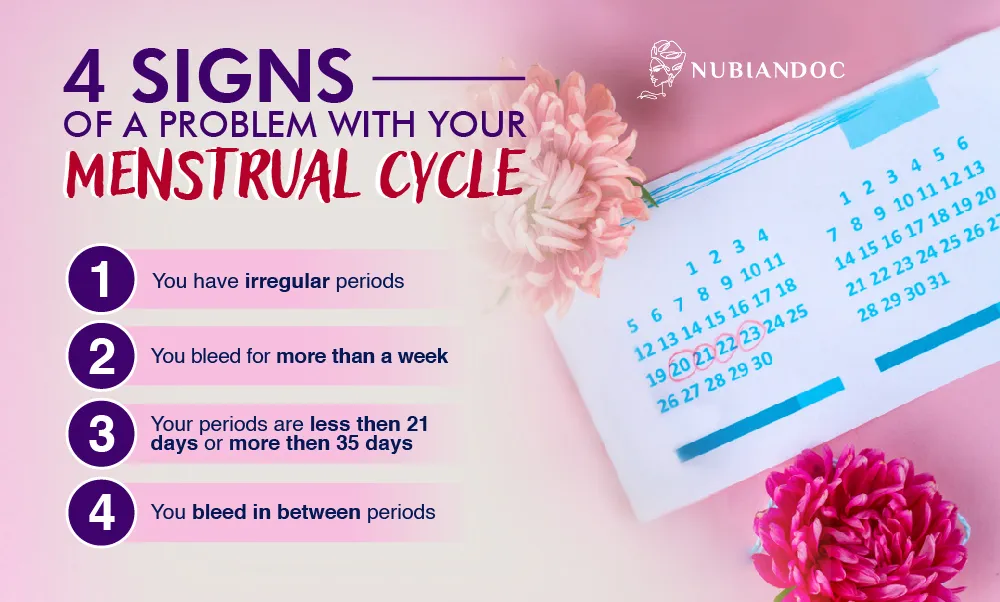
- Periods lasting longer than 7 days
- Cycles shorter than 21 days or longer than 35 days
- Severe cramping that requires prescription pain relief or disrupts daily activities, work, or sleep
- Pelvic pain outside of your period
- Spotting between periods consistently
- Missed periods for 3 or more months (when not pregnant, breastfeeding, or menopausal)
- Greyish or unusual discharge, particularly with odor, itching, or fever — see your doctor promptly
The Most Common Menstrual Disorders — What They Mean
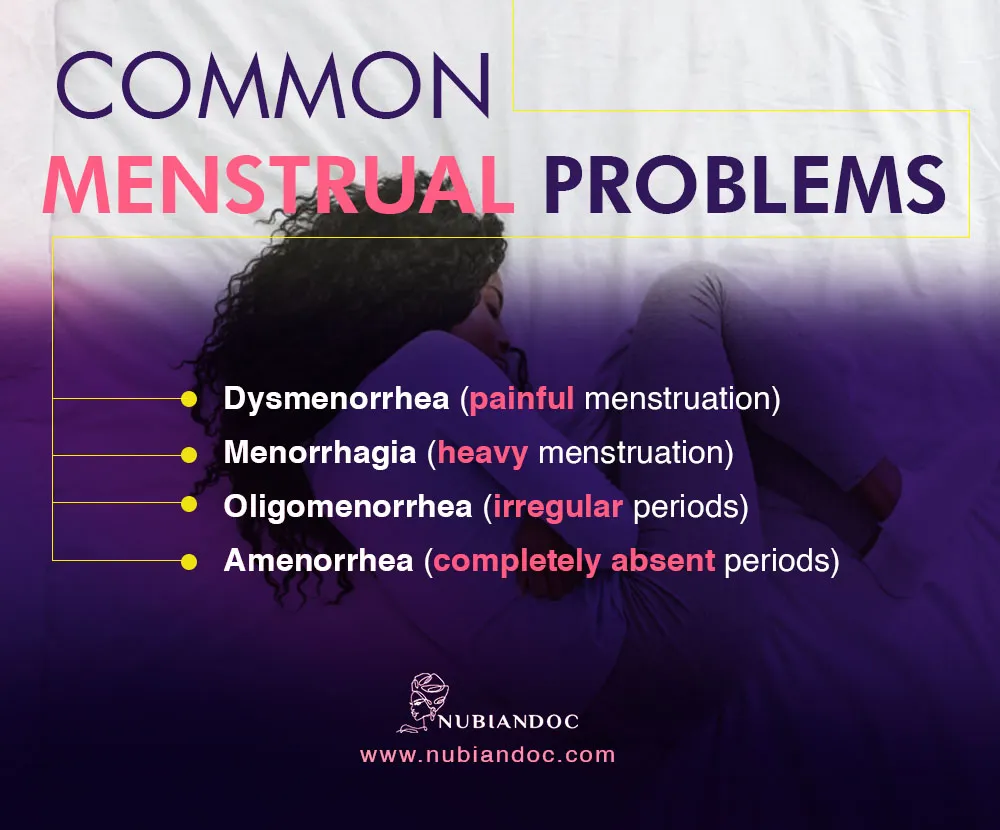
Dysmenorrhea (Painful Periods)
Dysmenorrhea — painful menstruation — affects a significant proportion of women. Primary dysmenorrhea is pain caused by prostaglandins, inflammatory compounds released during the breakdown of the endometrium that cause uterine contractions. NSAIDs like ibuprofen (Motrin) work by blocking prostaglandin production; starting them 1–2 days before your period begins is more effective than waiting until pain starts.
Secondary dysmenorrhea is period pain caused by an underlying condition — most commonly endometriosis, fibroids, or adenomyosis. This type of pain tends to be more severe, may worsen over time, and often doesn’t fully respond to OTC pain relievers. If your period pain is interfering with your daily life, it deserves evaluation — not just management.
Menorrhagia (Heavy Bleeding)
Heavy menstrual bleeding — defined clinically as losing more than 80 mL per cycle or having periods lasting longer than 7 days — is one of the most common reasons women see a gynecologist. It is also one of the most undertreated. Common causes include uterine fibroids, uterine polyps, adenomyosis, thyroid disorders, bleeding disorders such as von Willebrand disease, and hormonal imbalances.
Chronic heavy bleeding leads to iron-deficiency anemia — fatigue, brain fog, breathlessness, hair shedding, and poor exercise tolerance — which many women attribute to stress or age rather than recognizing as a treatable consequence of blood loss.
Oligomenorrhea (Infrequent Periods)
Cycles longer than 35 days or occurring fewer than 8 times per year. Common causes include polycystic ovary syndrome (PCOS), thyroid disorders (both hypo- and hyperthyroidism), elevated prolactin, low body weight or inadequate nutrition, excessive exercise, significant stress, or perimenopause. In adolescents, some cycle irregularity is normal in the first 1–2 years after menarche as the hormonal axis matures.
Amenorrhea (Absent Periods)
A missed period for 3 or more months after previously regular cycles warrants evaluation. The most common cause in reproductive-age women is pregnancy — rule this out first. Other causes include PCOS, thyroid dysfunction, high prolactin levels, hypothalamic suppression (from extreme stress, low body weight, or overtraining), premature ovarian insufficiency, and certain medications including hormonal contraceptives.
Premenstrual Syndrome (PMS) and PMDD
Premenstrual syndrome (PMS) describes physical and emotional symptoms occurring in the 5–10 days before menstruation — bloating, breast tenderness, fatigue, headaches, irritability, and mood changes — that resolve with the onset of bleeding. PMS is defined as symptoms significant enough to cause social or economic dysfunction in at least 3 consecutive cycles.
Premenstrual dysphoric disorder (PMDD) is a more severe form, characterized by marked mood symptoms — severe depression, anxiety, irritability, or hopelessness — in the luteal phase. PMDD is a recognized clinical condition, not “just hormones,” and responds to treatment including SSRIs (taken either continuously or cyclically during the luteal phase), oral contraceptives, and lifestyle interventions.
If your premenstrual symptoms significantly affect your relationships, work, or quality of life, bring this up with your physician. It is treatable.
What Your Period May Be Telling You About Other Health Conditions
This is where the vital sign framing becomes especially useful. The menstrual cycle is sensitive to the same systems that govern overall health. When something is off internally, the cycle often reflects it first.
| Menstrual Change | Possible Signal |
|---|---|
| Sudden irregular cycles | Thyroid disorder, PCOS, stress, significant weight change |
| Worsening heavy bleeding | Fibroids, polyps, adenomyosis, bleeding disorder |
| Increasingly severe cramps | Endometriosis, adenomyosis |
| Missed periods (not pregnant) | Hypothalamic amenorrhea, thyroid issue, elevated prolactin |
| Very short cycles (<21 days) | Perimenopause, hormonal imbalance |
| Premenstrual mood symptoms | PMDD, underlying depression or anxiety worth evaluating |
| New spotting between periods | Polyps, infection, cervical changes — see your doctor |
A 2024–2025 review in F&S Reviews confirmed that the menstrual cycle can serve as an indicator for endocrine diseases, bleeding disorders, structural anomalies, infections, and infertility. Tracking your cycle — even informally — gives you and your physician meaningful data.
A Conversation We Need to Have: Fibroids and Black Women
I want to speak directly to something here, because the data demands it.
By age 50, approximately 80% of Black women will develop uterine fibroids — compared to roughly 70% of all women. But beyond prevalence, the disparities are layered and serious:
- Black women develop fibroids earlier — in their 20s and 30s, compared to their 40s for most White women
- Fibroids in Black women tend to be larger, more numerous, and more symptomatic
- Black women are 2–3 times more likely to undergo hysterectomy for fibroids than White women — often at peak childbearing ages
- Black women report longer delays in diagnosis and describe more difficulty getting their symptoms taken seriously
- A 2025 study in JAMA Network Open analyzing nearly 2 million patients confirmed Black patients had significantly elevated fibroid diagnosis rates compared to White patients
A 2024 editorial in the American Journal of Obstetrics & Gynecology put it plainly: the root causes of these disparities include structural racism, insurance and access barriers, provider bias (dismissal of Black women’s symptoms is well-documented), historical distrust of the medical system rooted in gynecology’s abusive history, and biological pathways potentially influenced by chronic stress and allostatic load from navigating racism.
What this means for you: If you have heavy bleeding, severe cramping, pelvic pressure or fullness, frequent urination, or lower back pain — especially if these have been present for a while and you have been told it’s “normal” or to “just wait and see” — ask specifically about an ultrasound to evaluate for fibroids. You do not have to tolerate a symptom burden that is disrupting your life. There are now multiple treatment options beyond hysterectomy, including myomectomy (fibroid removal while preserving the uterus), uterine fibroid embolization (UFE), and FDA-approved medications that reduce fibroid size. You deserve to know your options.
Endometriosis: Often Missed, Often Dismissed
Endometriosis occurs when tissue similar to the uterine lining grows outside the uterus — on the ovaries, fallopian tubes, bowel, bladder, or other pelvic structures. It affects an estimated 10% of women of reproductive age and is one of the leading causes of chronic pelvic pain and infertility.
The average time from symptom onset to diagnosis is still 7–10 years — largely because severe period pain has been historically minimized and not recognized as a red flag. Key symptoms include:
- Debilitating period cramps that don’t respond to ibuprofen
- Pelvic pain throughout the month, not just during menstruation
- Pain during sex (dyspareunia)
- Pain with bowel movements or urination, especially during periods
- Heavy bleeding or spotting between periods
- Difficulty conceiving
Endometriosis is not detectable on a standard ultrasound (though it can sometimes be identified). Definitive diagnosis is surgical. If you have been living with severe period pain and told “it’s just bad cramps,” push for a referral to a gynecologist with endometriosis expertise.
PCOS: The Most Common Hormonal Disorder You May Not Know You Have
Polycystic ovary syndrome (PCOS) affects approximately 10–15% of women of reproductive age and is one of the most common causes of irregular or absent periods. Despite its name, you don’t necessarily have visible cysts to have PCOS — the diagnosis is based on irregular cycles, elevated androgens (testosterone), and/or polycystic-appearing ovaries on ultrasound.
Beyond reproductive health, PCOS carries significant metabolic implications: insulin resistance, elevated risk of type 2 diabetes, cardiovascular disease, and non-alcoholic fatty liver disease. It is a whole-body hormonal condition, not just a reproductive one.
If your cycles are irregular, you experience excess hair growth (on the face, chest, or abdomen), acne, scalp hair thinning, or difficulty managing your weight, ask your physician to evaluate for PCOS. Treatment is highly individualized and may include lifestyle changes, metformin, oral contraceptives, or other targeted interventions.
Nutrition and Your Menstrual Cycle
What you eat has a direct relationship with both menstrual symptoms and hormonal health.
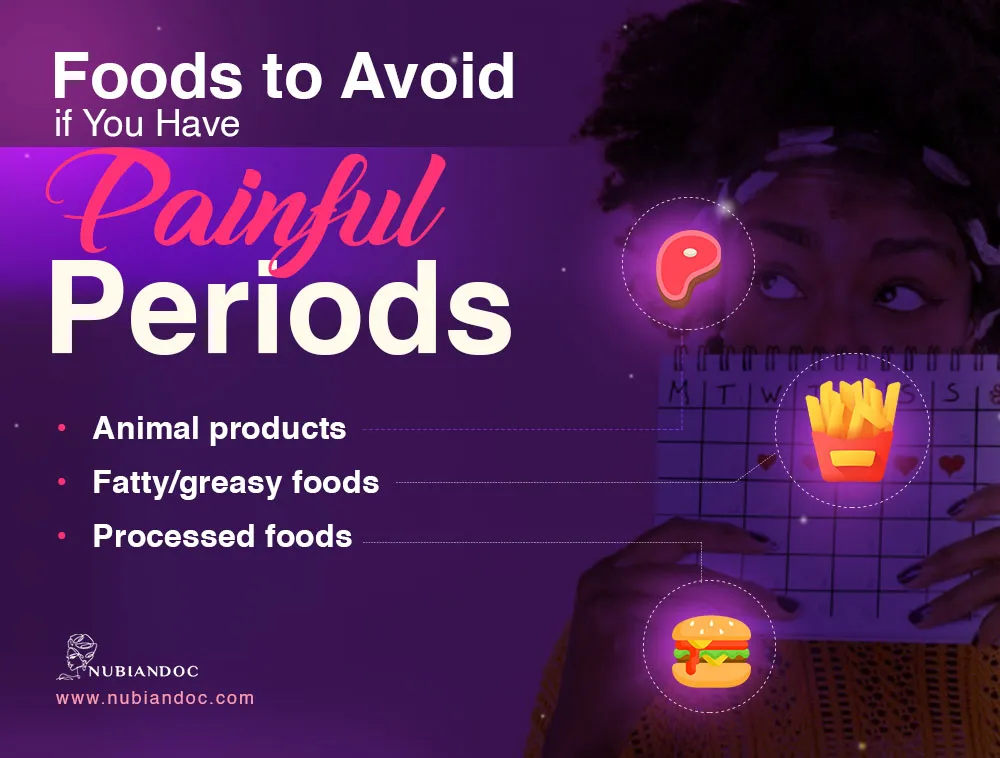
For cramping: Prostaglandins drive menstrual cramping — and diet influences prostaglandin production. An anti-inflammatory diet rich in vegetables, fruits, whole grains, legumes, nuts, and omega-3 fatty acids (salmon, sardines, flaxseeds, walnuts) may reduce the inflammatory prostaglandin load and ease cramping. Conversely, diets high in processed food, red meat, and added sugar tend to promote inflammation.
For heavy bleeding and energy: Heavy bleeding depletes iron. If your periods are heavy, prioritize iron-rich foods — leafy greens (spinach, collard greens, kale), beans and lentils, fortified oatmeal, lean red meat — and pair them with vitamin C-rich foods to enhance absorption. Ask your physician to check both your CBC and ferritin level; you can be iron-deficient without yet being anemic. See our post on vitamin supplementation for more on iron and ferritin testing.
For PMS and PMDD: Research suggests magnesium deficiency may contribute to PMS symptoms — irritability, anxiety, fatigue, and mood changes. Magnesium-rich foods include dark leafy greens, pumpkin seeds, almonds, black beans, and dark chocolate. Some women find supplemental magnesium glycinate helpful in the luteal phase; discuss with your doctor.
For bloating: In the luteal phase, progesterone-driven aldosterone activity causes fluid retention. Reducing caffeine, alcohol, and high-sodium foods in the week before your period may help. Counterintuitively, drinking more water — not less — supports fluid balance and reduces bloating.
Period Hygiene: What You Need to Know
Period products have expanded significantly. Options now include disposable pads and tampons, menstrual cups (silicone cups worn internally that collect rather than absorb flow), menstrual discs, period underwear, and reusable cloth pads. Each has advantages depending on your flow, lifestyle, and preferences.
A few clinical notes:
- Tampon safety: Change tampons every 4–8 hours to reduce risk of toxic shock syndrome (TSS), a rare but serious bacterial infection. Use the lowest absorbency adequate for your flow, and never sleep with a tampon in for more than 8 hours.
- Menstrual cups have an excellent safety profile and can be worn for up to 12 hours when properly fitted. They are reusable, cost-effective, and increasingly available.
- Scented products (pads, wipes, sprays) can disrupt the vaginal microbiome and are not recommended. The vagina is self-cleaning; external hygiene with water is sufficient.
Should You Track Your Cycle?
Yes — and you do not need a sophisticated app to do it. At minimum, note the first day of each period, the duration, and anything unusual about flow or symptoms. Over 3–6 cycles, this gives you and your physician meaningful data.
Cycle tracking can help identify:
- Irregular patterns that warrant evaluation
- Predictable PMS or PMDD symptoms amenable to treatment
- Ovulation timing for those trying to conceive
- Changes following a new medication, health event, or significant stress
Apps like Clue and Flo allow free basic tracking. For a more comprehensive approach, noting cervical fluid changes, basal body temperature, and energy levels gives a fuller picture of your hormonal cycle.
When to See Your Doctor
In addition to the warning signs listed above, schedule a visit if:
- Your periods have changed significantly from your baseline without a clear explanation
- You are struggling with symptoms that affect your daily functioning, relationships, or work
- You are trying to conceive and have been unsuccessful after 12 months (or 6 months if you are over 35)
- You have been told you have fibroids and have not discussed your full range of treatment options
- You experience pelvic pain outside of your period
- You have significant premenstrual mood changes that are affecting your quality of life
A note on advocating for yourself: Research — including the 2024 AJOG editorial on fibroids — documents that Black women’s symptoms are more frequently dismissed or undertreated by healthcare providers. This is a systemic failure, not a reflection of your pain threshold or the validity of your symptoms. If you feel your concerns are not being taken seriously, you are within your rights to ask for further evaluation, seek a second opinion, or request a referral to a specialist. Your symptoms are real. You deserve care that responds to them.
The Bottom Line
Your menstrual cycle is a window into your hormonal, reproductive, and general health. It deserves the same clinical attention as your blood pressure or your cholesterol. Irregularities, pain beyond what NSAIDs can manage, and heavy bleeding that disrupts your life are not things to push through — they are signals worth investigating.
Know what’s normal for you. Track your cycle. And when something changes or has always been difficult — say so out loud at your next appointment. You don’t have to normalize what isn’t.
For more on how hormones and lifestyle intersect with your health, read our posts on exercise and the menstrual cycle, vitamin supplementation and iron deficiency, how sugar affects inflammation, and maintaining a healthy weight.
References:
- Rosen Vollmar AK, Mahalingaiah S, Jukic AM. The Menstrual Cycle as a Vital Sign: A Comprehensive Review. F&S Reviews. 2025;6(1):100081.
- ACOG Committee Opinion No. 651. Menstruation in Girls and Adolescents: Using the Menstrual Cycle as a Vital Sign. Obstet Gynecol. 2015.
- Mitro SD et al. Uterine Fibroid Diagnosis by Race and Ethnicity in an Integrated Health Care System. JAMA Network Open. 2025;8(4):e255235.
- Eltoukhi HM et al. The Health Disparities of Uterine Fibroids for African American Women: A Public Health Issue. Am J Obstet Gynecol. 2014.
- Roberson ML. The Fibroid Crisis in Black Women: More Work to Be Done. Am J Obstet Gynecol. 2024.
- Plowden TC, Marsh EE. Racial Disparities in Uterine Fibroids and Endometriosis: A Systematic Review. Fertil Steril. 2023.
- ACOG. Your Menstrual Cycle FAQ.
- ACOG. Premenstrual Syndrome (PMS) FAQ.
- American Society of Hematology. Von Willebrand Disease.
