

Not the marketing version. The clinical version.
This post covers what intermittent fasting is, what its different forms involve, what the most current evidence says about its benefits and its risks — including a major 2024 study that added important caution to the conversation — and who it may or may not be appropriate for.
What Is Intermittent Fasting?
Intermittent fasting (IF) is an umbrella term for eating patterns that cycle between defined periods of eating and fasting. Unlike most traditional diets, the primary focus is when you eat rather than what you eat — though food quality still matters significantly for overall outcomes.
The core mechanism: by extending the window between your last meal and your next one, your body depletes its immediate glucose stores and begins drawing on fat for fuel. Depending on the fasting duration and individual metabolic factors, this metabolic shift can influence insulin sensitivity, inflammation, weight, and other markers of cardiometabolic health.
The Main Types of Intermittent Fasting
| Fasting Type | Schedule |
|---|---|
| 16:8 method | Eat within an 8-hour window; fast for 16 hours |
| 20:4 method | Eat within a 4-hour window; fast for 20 hours |
| 5:2 diet | Eat normally 5 days a week; limit to ~500 calories on 2 non-consecutive days |
| Alternate Day Fasting (ADF) | Alternate between normal eating days and fasting/very low calorie days |
| Modified ADF | Similar to ADF but with ~500 calories allowed on fasting days |
| 24-hour fast | Fast completely for 24 hours, once or twice per week |
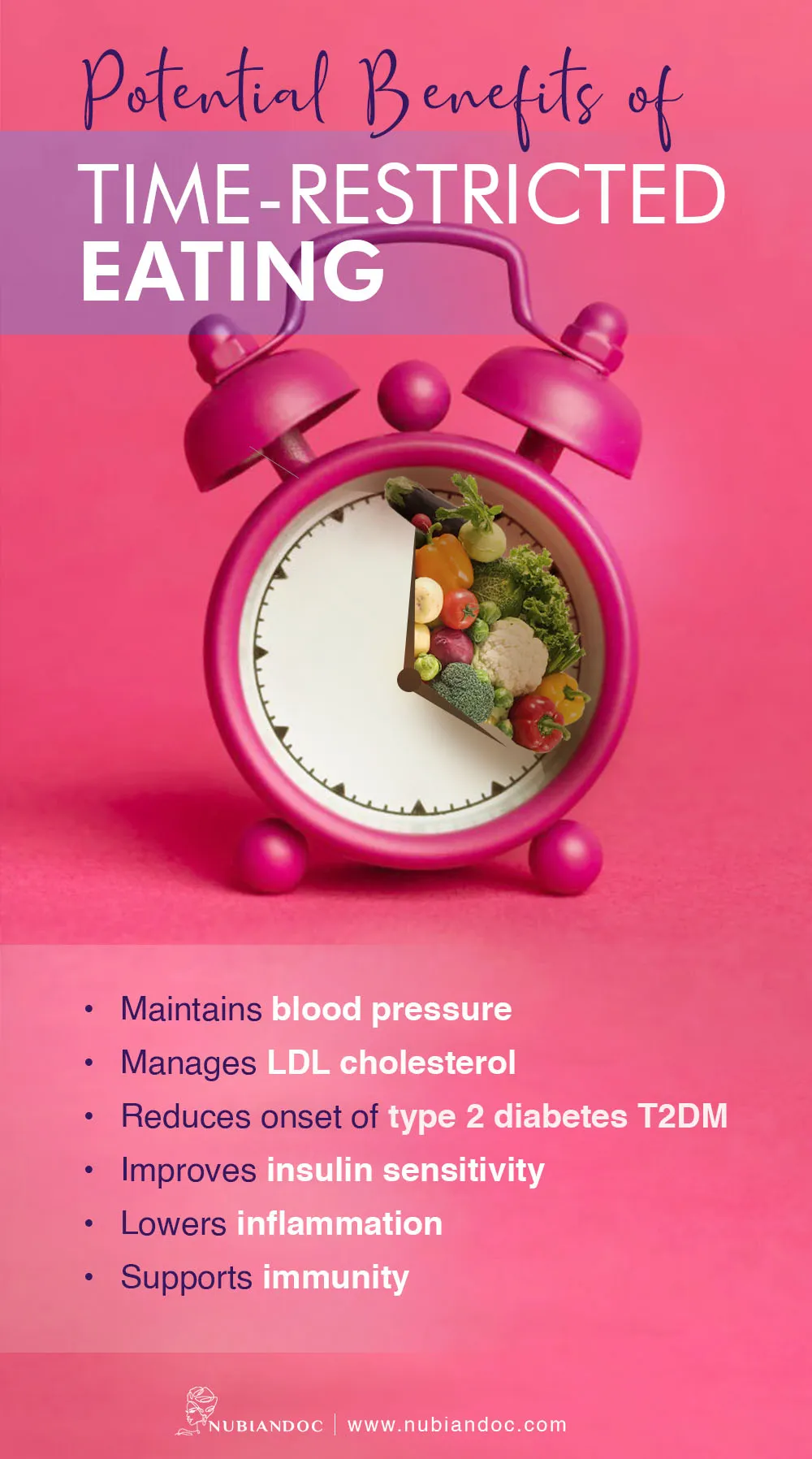
The most commonly practiced form is the 16:8, often implemented as time-restricted eating (TRE) — eating within a defined daily window without necessarily counting calories.
Early vs. Late Time-Restricted Eating: Why Timing Matters
Time-restricted eating is further divided into two patterns based on when during the day the eating window falls:
Early time-restricted eating (eTRE): Eating window in the earlier part of the day — typically 8 a.m. to 4 or 5 p.m. This aligns food intake with circadian rhythm, the body’s internal biological clock that governs metabolism, hormone secretion, and energy regulation.
Late time-restricted eating (lTRE): Eating window in the later part of the day — typically noon to 8 or 9 p.m. This is the pattern most commonly practiced because it’s socially easier, but it may be less metabolically optimal.
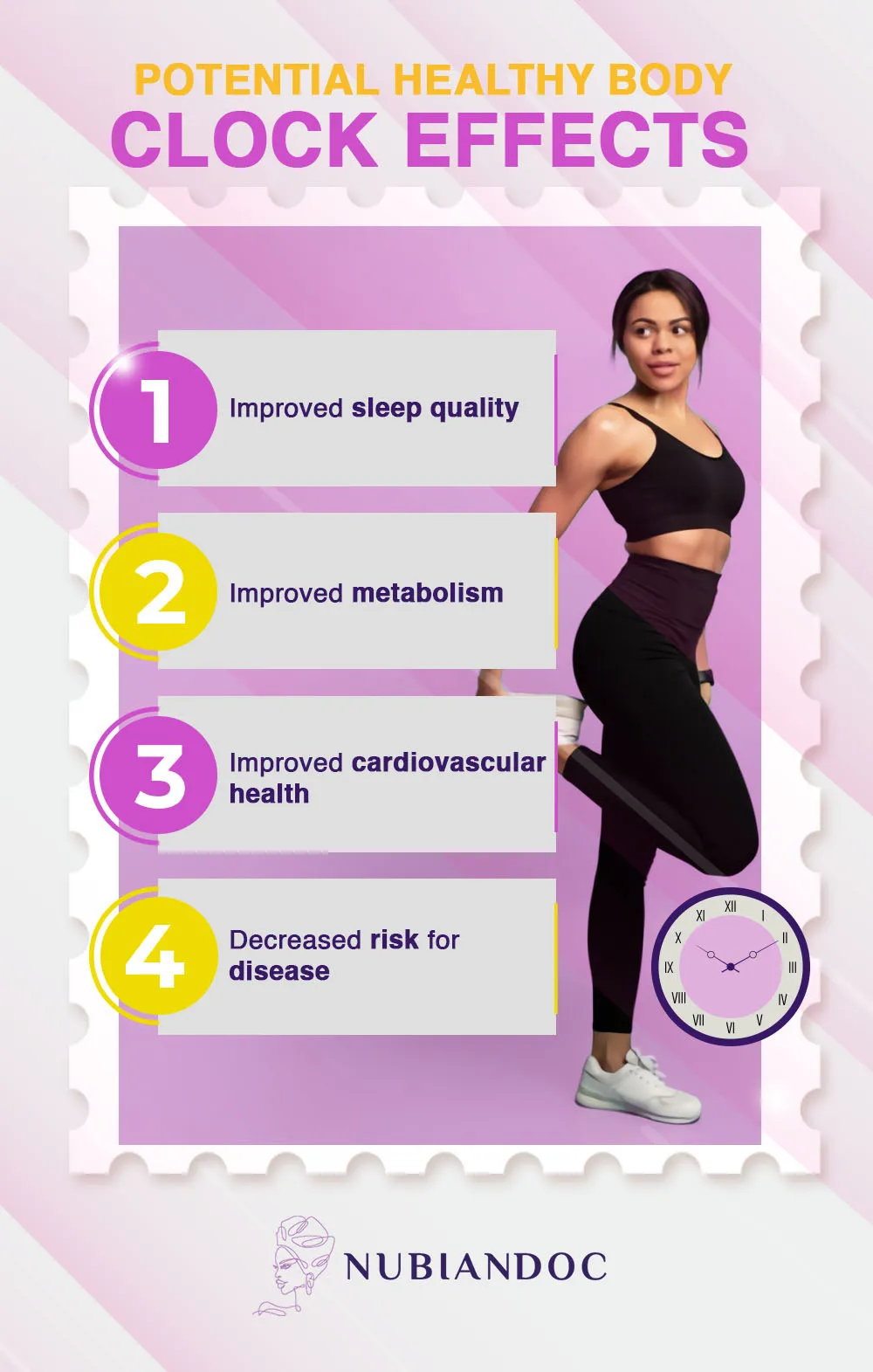
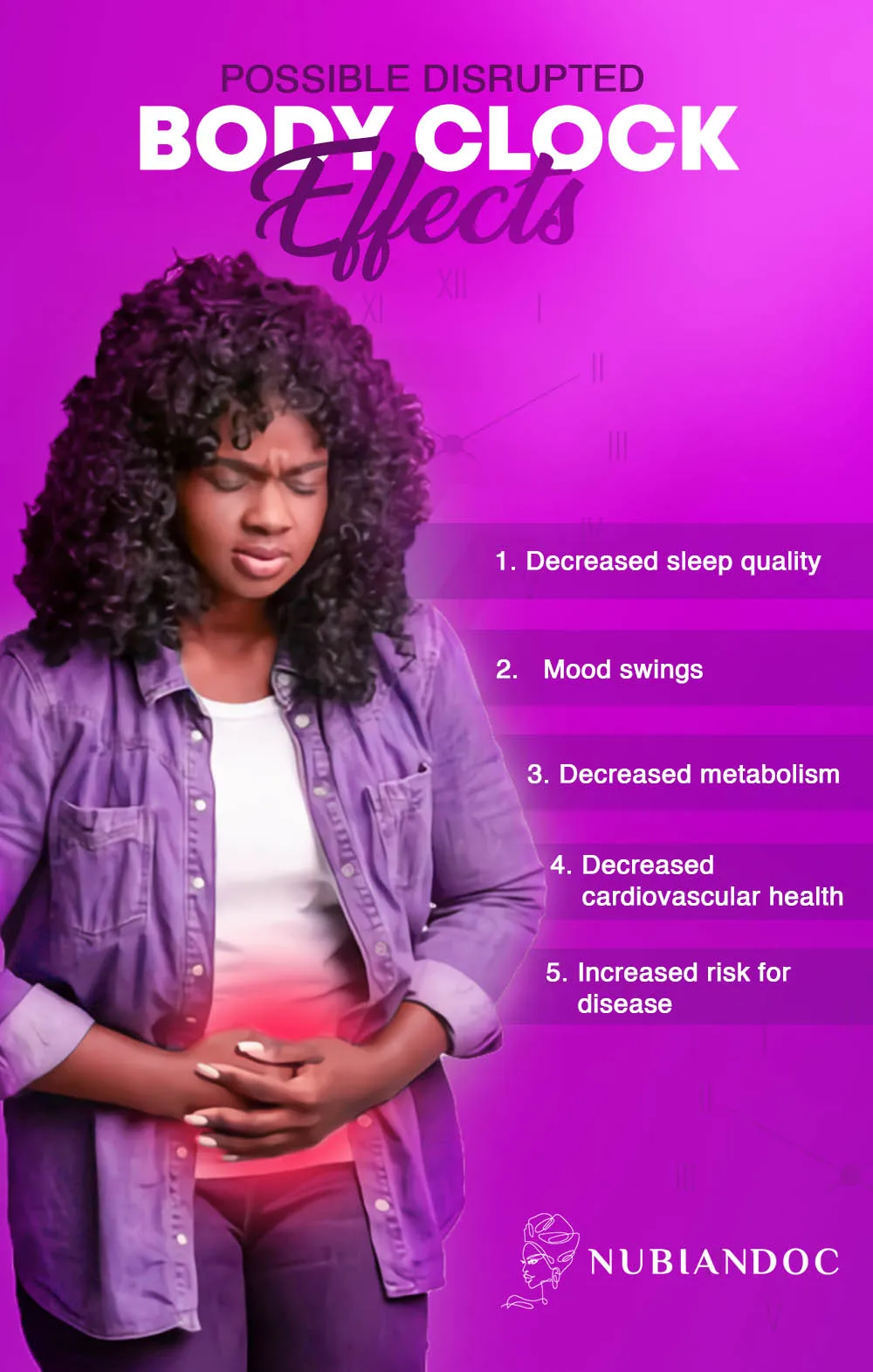
Research consistently suggests eTRE has advantages over lTRE. Aligning meals with the circadian rhythm — front-loading calories earlier in the day when insulin sensitivity is highest — appears to improve fat-burning efficiency, reduce hunger hormones, and support better glycemic control. Eating late, especially after 8 p.m., misaligns with the body’s natural metabolic rhythms and has been associated with increased risk of insulin resistance and weight gain over time.
What the Current Evidence Shows: The Benefits
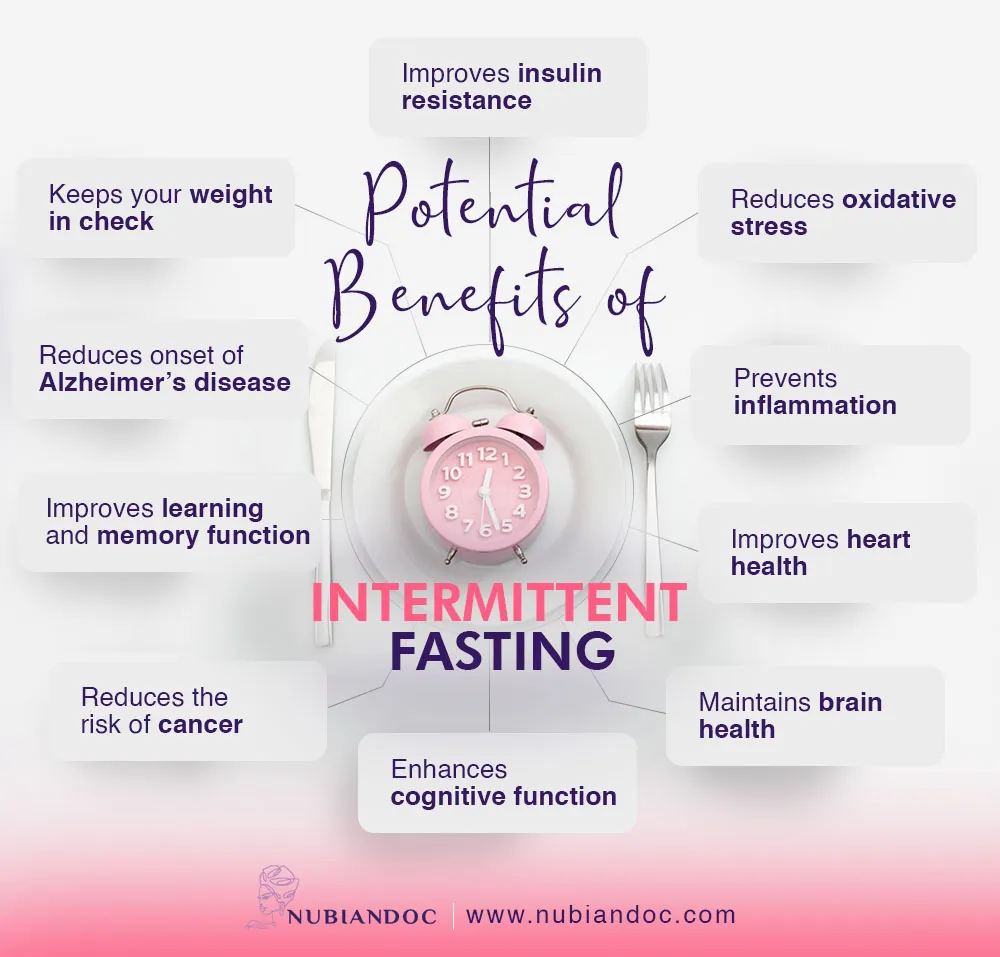
A 2025 systematic review and network meta-analysis published in Current Nutrition Reports synthesized data from 56 randomized controlled trials conducted between 2013 and 2024, covering nearly 4,000 participants across 16 countries. The findings showed that compared to a standard diet, various IF approaches produced meaningful reductions in:
- Body weight — modified alternate-day fasting showed the largest effect (–5.18 kg average)
- Waist circumference — a key marker of visceral fat and metabolic risk
- LDL cholesterol — the “bad” cholesterol linked to cardiovascular disease
- Blood pressure — both systolic and diastolic
- Fasting plasma glucose — relevant for diabetes prevention and management
A separate 2025 Nature Communications RCT found that 6 months of IF produced an 8% reduction in body weight, a 16% decrease in body fat, and significant improvements in LDL cholesterol, non-HDL cholesterol, and triglycerides — accompanied by measurable changes in GLP-1-related metabolic signaling.
Additional evidence supports IF’s potential role in:
- Insulin sensitivity — particularly in individuals with prediabetes or metabolic syndrome
- Inflammation — some studies show reductions in inflammatory markers including CRP
- Liver health — research suggests IF may reduce fat accumulation in the liver (relevant to NAFLD/MASLD)
- Cognitive function — early research points to possible neuroprotective effects, though human data remain limited
For women with PCOS, emerging data is particularly notable. A 2025 systematic review found that TRF interventions led to 33–40% of participants reporting normalized menstrual cycles, along with reductions in testosterone, the free androgen index, and improvements in insulin sensitivity — all core concerns in PCOS management. This positions IF as a potential non-pharmacological tool worth discussing with your provider if PCOS is part of your health picture.
The 2024 AHA Cardiovascular Finding: What You Need to Know
This is the part that changed the conversation — and that anyone practicing or recommending IF needs to take seriously.
In March 2024, preliminary research presented at the American Heart Association’s Epidemiology and Prevention | Lifestyle and Cardiometabolic Scientific Sessions analyzed data from more than 20,000 U.S. adults over approximately a decade. The study found that people who ate within an 8-hour window — the standard 16:8 protocol — had a 91% higher risk of death from cardiovascular disease compared to those who ate across a 12–16 hour window. The risk was especially pronounced in individuals with pre-existing heart disease or cancer.
This is a significant finding that warrants clear communication, not minimization.
However, important context is essential:
- This was an observational study using self-reported dietary data from two 24-hour recall periods — meaning it captures a snapshot of eating patterns, not a sustained long-term habit confirmed over time
- Observational studies identify associations, not causation — people already unwell may naturally compress their eating windows due to illness, appetite loss, or other factors (known as reverse causation)
- The study has not yet been published in a peer-reviewed journal and is considered preliminary
- It conflicts with a substantial body of controlled trial evidence showing cardiovascular benefits from IF in healthy, overweight adults
What does this mean practically? It means that IF — particularly aggressive time-restriction — is not appropriate for everyone, and that individuals with existing cardiovascular disease, heart failure, or serious chronic illness should discuss any fasting approach with their physician before starting. It also reinforces that IF should not be treated as a universally safe intervention that bypasses the need for clinical assessment.
The science is still evolving. As your physician, I believe in giving you the full picture — including the findings that complicate a trend, not just the ones that support it.
What IF Does Not Do
A few important points the enthusiasm around IF often glosses over:
It is not a substitute for food quality. IF says nothing about what you eat during your eating window. A 16:8 schedule filled with ultra-processed food, excess sugar, and refined carbohydrates will not yield the metabolic benefits seen in research — and may actively undermine them. Read our post on how added sugar affects your health for more on why what you eat still matters enormously.
Weight loss results are modest and comparable to calorie restriction. Most head-to-head studies comparing IF to standard calorie restriction find similar weight loss outcomes — meaning IF is not a metabolic magic trick. Its advantage for many people is behavioral: it simplifies decision-making by removing certain meals from the equation rather than requiring continuous caloric tracking.
Long-term sustainability data is limited. The majority of IF trials are short-term (under 6 months). We do not yet have strong data on long-term adherence, long-term weight maintenance, or long-term safety profiles beyond observational data.
Who Should NOT Practice Intermittent Fasting
IF is not appropriate for everyone. It should be avoided or approached with significant caution in:
- Pregnant or breastfeeding women — caloric and nutritional needs are elevated; restriction is contraindicated
- Women actively trying to conceive — the evidence on IF and fertility in healthy women without PCOS is limited; consult your OB or reproductive endocrinologist before restricting
- Anyone with a current or past history of disordered eating — structured food restriction can trigger or reactivate eating disorder behaviors; this is a hard stop
- Children and adolescents — still in active growth phases; caloric restriction is not appropriate
- Underweight individuals — further caloric restriction is contraindicated
- People with type 1 diabetes or those on insulin or sulfonylureas — fasting without medication adjustment creates serious hypoglycemia risk; any fasting approach must be medically supervised
- People with serious cardiovascular disease — given the 2024 AHA data, caution is warranted until more peer-reviewed evidence is available
- Anyone with a chronic illness that affects nutritional absorption — Crohn’s disease, celiac disease, kidney disease, and similar conditions require individualized nutritional management
If you take any medications, have a chronic condition, or have had surgery that affects your digestion, talk to your doctor before starting any fasting protocol. This is not a formality — it is genuinely important.
Practical Guidance If You Choose to Try IF
If you’re a generally healthy adult without the contraindications above and want to explore IF, here is how to approach it thoughtfully:
Start with eTRE and an 8–10 hour window. Rather than jumping to aggressive 16:8 restriction, consider beginning with a 10-hour eating window (e.g., 8 a.m. to 6 p.m.) aligned with your natural wake/sleep cycle. This is gentler, more sustainable, and more consistent with circadian biology.
Protect food quality within the eating window. Follow the USDA Dietary Guidelines — vegetables, fruits, whole grains, lean protein, and healthy fats at every meal. If you’re compressing your eating window, nutritional density becomes even more important, not less.
Stay hydrated during fasting hours. Water, plain sparkling water, black coffee, and unsweetened tea are all acceptable during fasting periods. Anything containing calories — including flavored drinks, cream in coffee, or “healthy” juices — breaks the fast.
Exercise remains essential. IF is not a substitute for physical activity. The CDC’s physical activity guidelines recommend at least 150 minutes of moderate activity per week for adults. See our post on strength training and its benefits for your mind and body for more on building movement into your routine.
Monitor how you feel. Persistent fatigue, dizziness, irritability, hair loss, menstrual irregularities, or difficulty concentrating are signals worth paying attention to. These can indicate that your fasting approach is too aggressive or nutritionally inadequate for your body. Any of these symptoms should prompt a conversation with your physician.
Align eating with your schedule. IF that works beautifully for a person with a predictable 9-to-5 schedule may be genuinely unsustainable for someone working rotating shifts, overnight hours, or managing a household with young children. The best dietary approach is one you can actually maintain — not one you follow for three weeks and abandon.
A Brief Note on IF and Hormones in Women
This deserves honest acknowledgment: women’s hormonal physiology is more sensitive to caloric restriction than men’s, and most IF research has been conducted in mixed-sex or predominantly male populations.
Concerns that IF disrupts female reproductive hormones have largely been extrapolated from rat studies involving extreme fasting conditions — including alternate-day complete fasting in prepubescent animals — which don’t translate directly to how human women practice moderate time-restricted eating.
Human trial data currently suggests that moderate TRE in healthy premenopausal women does not appear to meaningfully disrupt estrogen, LH, or FSH at the population level. However, the research is limited and doesn’t account well for individual variation in hormonal sensitivity, stress load, or baseline nutritional status.
If you are noticing changes in your menstrual cycle after starting IF — including missed periods, significant irregularity, or worsening PMS — that is your body communicating something important. Do not dismiss it. Consult your physician.
The Bottom Line
Intermittent fasting is a legitimate dietary strategy with a meaningful evidence base for weight management and certain metabolic benefits — particularly in adults with overweight, insulin resistance, or PCOS. Early time-restricted eating aligned with the circadian rhythm appears to be the most physiologically supported approach.
At the same time, the 2024 AHA cardiovascular data introduced important questions about aggressive time-restriction in people with pre-existing heart disease, and the broader research base still has significant gaps — particularly around long-term outcomes, effects in women, and populations with chronic illness.
My clinical bottom line: IF can be a useful tool for the right person, approached thoughtfully, with appropriate medical oversight. It is not a universal prescription, not a shortcut, and not something to implement from a social media reel without understanding the full picture.
If you’re considering it, bring the conversation to your physician. Let your health history, labs, and lifestyle guide the decision — not just a trend.
Want to go deeper on nutrition and metabolic health? Read our posts on how to quit sugar and reduce your metabolic risk, vitamin and supplement evidence, understanding your menstrual cycle, and how to maintain a healthy weight.
References:
- Chen M, Zhong VW. Association Between Time-Restricted Eating and All-Cause and Cause-Specific Mortality. AHA EPI|Lifestyle Scientific Sessions 2024. Abstract P192.
- Qiu Z et al. Beneficial effects of time-restricted fasting on cardiovascular disease risk factors: a meta-analysis. BMC Cardiovascular Disorders. 2024.
- Samdani et al. Intermittent Fasting for the Prevention of Cardiovascular Disease Risks: Systematic Review and Network Meta-Analysis. Current Nutrition Reports. 2025.
- Lyngstad et al. Cardiometabolic and molecular adaptations to 6-month intermittent fasting in middle-aged men and women. Nature Communications. 2025.
- Velissariou M et al. The impact of intermittent fasting on fertility: PCOS and reproductive outcomes. Metabol Open. 2025.
- Cienfuegos S et al. Effect of Intermittent Fasting on Reproductive Hormone Levels in Females and Males. Nutrients. 2022.
- Eliopoulos AG et al. A perspective on intermittent fasting and cardiovascular risk in the era of obesity pharmacotherapy. Frontiers in Nutrition. 2025.
- Sleep Foundation. Circadian Rhythm Fasting.
- Cleveland Clinic. Why Intermittent Fasting May Be Less Effective for Some Women.
