
If you’re a Black woman, your hair is never just hair. It’s identity, culture, labor, and politics — all growing from your scalp simultaneously. It’s the reason you schedule your wash days like appointments, the reason you go to bed with a satin scarf, and the reason a bad hair day can genuinely affect how you move through the world.
But here’s what I need you to understand as your physician: your hair is also a health indicator. What’s happening at your hairline, your crown, and your edges is often communicating something deeper — about your hormones, your diet, your stress load, and in some cases, your risk for conditions that have nothing to do with hair at all.
In this article, we’re going to cover the full picture: the science of Black hair, the most common causes of hair loss, what the latest research reveals about chemical hair products and cancer risk, how to nourish your hair from the inside out, and how to protect what you have. This is the conversation your dermatologist may not have had with you — and the one you deserve.
Understanding Black Hair: The Science
Black hair is structurally distinct from other hair types — and understanding why is the foundation of caring for it well.
The hair follicle in people of African descent is curved or elliptical rather than round. This curved shape is what produces the tightly coiled, curled, or kinked strands that characterize natural Black hair. Each bend in the strand represents a structural point of vulnerability — a place where the hair shaft is more susceptible to mechanical stress. This is not a defect. It is a feature of extraordinary, beautiful hair that simply requires an equally specific approach to care.
Because of its curl pattern, natural Black hair tends to grow upward rather than downward, can hold gravity-defying shapes like Afros and puffs, and is more prone to moisture loss than straighter hair types. Moisture travels down a straight shaft relatively easily; in a coiled strand, it has to navigate each twist and curve, making consistent moisture retention a central challenge of natural hair care.
This structural reality explains why many of the styling and chemical practices common in Black hair culture — tight braiding, chemical relaxers, heat straightening — carry specific and well-documented risks that deserve to be taken seriously.
Black Women and the Hair Industry
Black women are the backbone of the hair care industry. African American women account for approximately 30% of spending on synthetic hair, human hair wigs, and hair care products — and are six times more likely than their European counterparts to spend money on hair care. The global Black hair care market has grown substantially, driven in large part by the natural hair movement and a shift toward products specifically formulated for textured hair.
That market power matters — and it increasingly comes with accountability. As we’ll discuss below, some of the products that have been marketed most aggressively to Black women carry health risks that the industry has been slow to disclose.
The Most Important Hair Loss Conditions in Black Women
1. Traction Alopecia — The Most Common Cause of Hair Loss We Can Prevent
Traction alopecia (TA) is hair loss caused by repetitive or sustained pulling force on the hair follicle — and it is the leading cause of hair loss in Black women. Approximately one-third of women of African descent are affected. In some study populations, prevalence among adult Black women reaches as high as 31.7%.
The mechanism is straightforward: when hairstyles repeatedly pull on the root — through tight braids, cornrows, weaves, extensions, or high ponytails — the follicle is gradually damaged. In early stages, this produces non-scarring patches of hair loss along the areas under tension, often accompanied by broken hairs, scalp tenderness, or small pustules around the follicle. If the traction continues, the damage progresses to irreversible scarring alopecia — meaning the follicle is permanently destroyed and the hair will not grow back.
Research has identified the highest-risk hairstyles as tight buns or ponytails, weaves or hair extensions, and tight braids including cornrows and dreadlocks. The risk is significantly compounded when these styles are combined with chemical relaxers, which weaken the hair shaft by breaking its disulfide bonds — making it less resistant to the force being applied.
| Clinical Features & Diagnoses for Traction Alopecia | ||
| Clinical features: What it Looks Like | Where to Look | |
| Traction folliculitis |
|
|
| Marginal traction alopecia |
|
|
| Non-marginal traction alopecia |
|
|
What you can do: Traction alopecia is largely preventable with appropriate education and hairstyle modifications. Looser braids, alternating between tight and low-tension styles, avoiding combining chemical relaxers with high-traction styles, and giving your edges regular breaks can all significantly reduce risk. If you’re noticing hairline thinning or edge loss — see a dermatologist sooner rather than later. Early traction alopecia is treatable; late-stage scarring is not.
2. Central Centrifugal Cicatricial Alopecia (CCCA) — The Condition Black Women Need to Know About
CCCA is the most common form of permanent, scarring alopecia in Black women — and it may be connected to more of your health than you realize.
CCCA begins at the crown of the scalp and spreads outward in a centrifugal pattern, gradually destroying hair follicles through a process of inflammation and fibrosis (scarring). It disproportionately affects women of African descent, with some estimates placing its prevalence at up to 17% of Black women over 50. Because it often progresses slowly with minimal visible inflammation, it is frequently missed until significant permanent loss has already occurred.
What makes CCCA especially important from a physician’s perspective is a striking body of research linking it to systemic health conditions — particularly conditions also more prevalent in Black women:
- CCCA and Uterine Fibroids: Research published in JAMA Dermatology found that Black women with CCCA have nearly five times the risk of uterine fibroids compared to matched controls — 13.9% of women with CCCA had fibroids, versus 3.3% of those without. The mechanism is believed to involve shared “fibroproliferative” gene pathways: CCCA is associated with upregulation of collagen genes and fibrotic signaling that also drives fibroid growth. This is not coincidental. It may reflect a systemic tendency toward abnormal scarring that affects multiple organs.
- CCCA and Type 2 Diabetes: Multiple studies have found significantly higher rates of Type 2 diabetes in women with CCCA compared to those without it, with one large cohort study showing a hazard ratio of 2.24.
What this means for you: If you have CCCA — or suspect you might — ask your gynecologist about fibroid screening and ask your primary care physician about metabolic screening. Your scalp is signaling something your body needs you to address. And if you have fibroids or T2DM and are experiencing central hair thinning, mention it to your doctor.
CCCA treatment options are limited and aimed at slowing progression: topical and injected corticosteroids, oral antibiotics with anti-inflammatory properties, and careful elimination of traction and chemical triggers. Emerging research is exploring antifibrotic agents. Early intervention is critical — as with traction alopecia, once the follicle scars, regrowth is not possible.
3. Chemical Hair Relaxers and Cancer — What the Research Now Shows
This is a section I would not have been able to write five years ago — not because the risk didn’t exist, but because we didn’t yet have the evidence. We do now, and it is alarming enough that you need to know.
- Uterine Cancer: A landmark 2022 NIH-funded study of over 33,000 women in the Sister Study found that women who used chemical hair straighteners or relaxers more than four times per year were more than twice as likely to develop uterine cancer compared to non-users. Researchers estimated that 1.64% of women who never used hair straighteners would develop uterine cancer by age 70 — but for frequent users, that figure rose to 4.05%. Because Black women use these products more frequently, begin use at earlier ages, and use them over longer periods than other racial groups, the risk is disproportionately borne by our community.
- Other Cancers: A 2025 analysis from the same Sister Study cohort found that chemical hair straighteners and relaxers may also be associated with higher incidence of thyroid cancer, non-Hodgkin’s lymphoma, and pancreatic cancer — expanding the concern well beyond hormonally-driven cancers. The researchers note that formaldehyde, phthalates, parabens, bisphenol A, and heavy metals — chemicals commonly found in these products — have established genotoxic and endocrine-disrupting properties.
- Ovarian Cancer: Prior studies have also linked frequent relaxer use to elevated ovarian cancer risk.
What this means clinically:
These studies show association, not definitive causation — and that distinction matters scientifically. But the associations are consistent, biologically plausible, and have now appeared across multiple large independent cohorts. As a physician, I would be doing you a disservice not to discuss them.
If you currently use chemical relaxers or straighteners, I’m not telling you to stop immediately and never look back. I am telling you to have an informed conversation about risk. Consider:
- Reducing frequency of use
- Exploring heat-free natural styling or transitioning to natural hair
- Being aware of early symptoms of uterine cancer (abnormal uterine bleeding, pelvic pain) and not dismissing them
- Discussing your history of relaxer use with your gynecologist
The natural hair movement was not just cultural. It was protective.
Why Black Women Struggle with Hair Loss: The Full Picture
Beyond the specific conditions above, several factors converge to make hair retention challenging for Black women:
- Structural vulnerability. The curved follicle and coiled strand structure, while beautiful, creates inherent mechanical fragility. Every bend in the strand is a potential breaking point under friction, tension, or chemical stress.
- Moisture loss. Natural Black hair loses moisture more readily than straighter hair types, leading to dryness and brittleness that increases breakage risk.
- Product ingredients. Many mainstream shampoos and styling products contain sulfates and alcohols that strip natural oils from an already moisture-sensitive hair type.
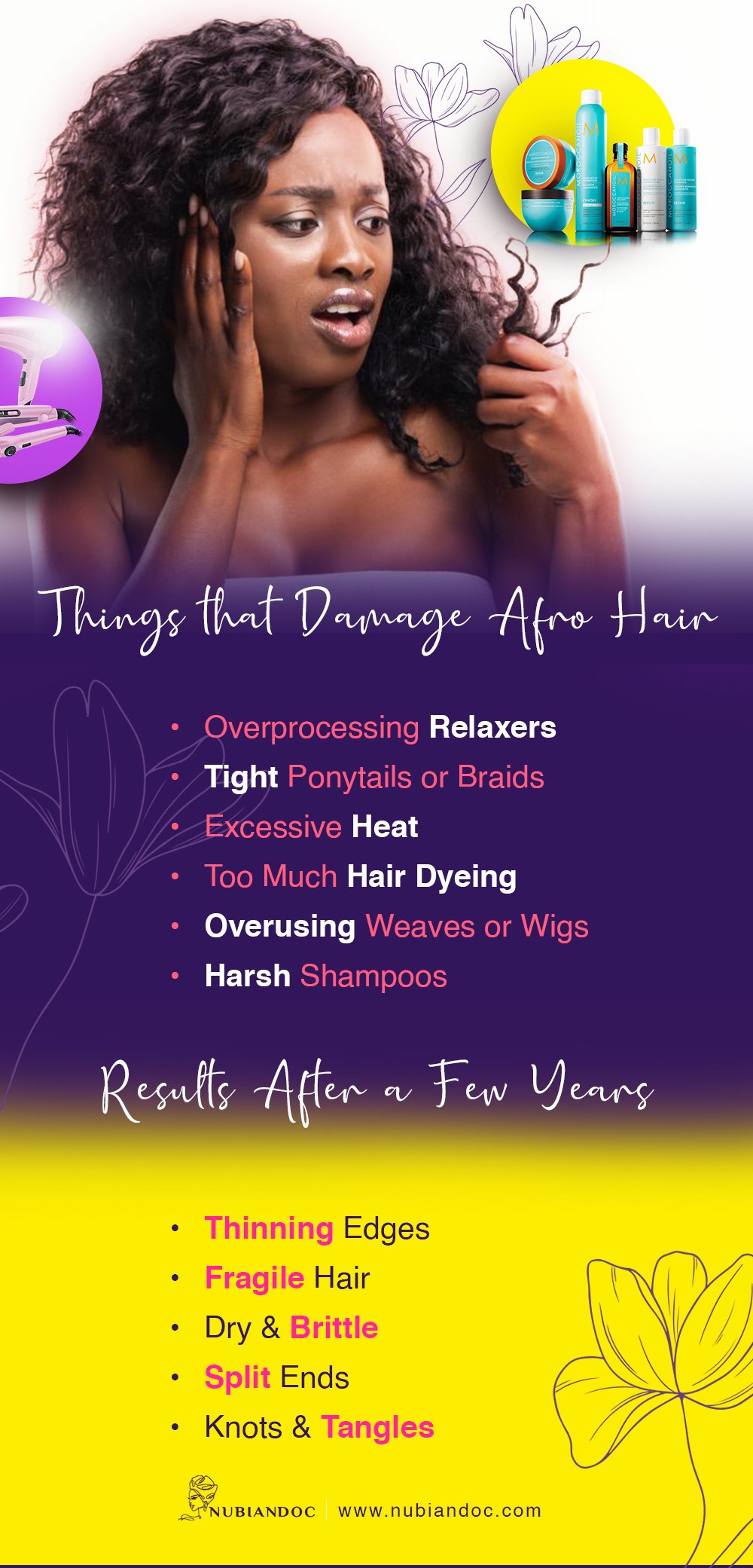
- Styling practices. Heat, tension, and chemical processing — often in combination — accumulate damage over time.
- Diet and systemic health. Iron deficiency, vitamin D deficiency, thyroid dysfunction, and hormonal imbalances all manifest in hair loss or poor hair quality. These conditions are more prevalent and frequently underdiagnosed in Black women.
- Stress. Chronic psychological stress — including the documented effects of racial stress — can trigger telogen effluvium (diffuse shedding) and worsen inflammatory scalp conditions.
What You Eat Affects Your Hair
Hair is made primarily of keratin — a protein — and its growth depends on a continuous supply of nutrients. Here’s what the evidence supports:
Iron and Ferritin: Iron deficiency is one of the most common and overlooked causes of hair shedding in women. Dark leafy greens (spinach, kale), beans, lentils, and red meat are strong dietary sources. Pair plant-based iron with vitamin C to enhance absorption.
Protein: Hair is protein. Inadequate dietary protein directly impairs hair growth and shaft integrity. Eggs, fish, legumes, and poultry are excellent sources.
Omega-3 Fatty Acids: Fish like salmon, cod, and sardines provide omega-3 fatty acids that support scalp health and reduce inflammation around the follicle. Walnuts and flaxseed are plant-based sources.
Biotin (Vitamin B7): Found in eggs, beans, and nuts, biotin supports keratin infrastructure. Deficiency — while less common than supplement marketing suggests — does produce brittle hair and nails.
Vitamin E: Almonds are one of the best sources. Approximately 20 almonds provides around 80% of the daily vitamin E requirement, supporting scalp circulation and antioxidant protection.
Zinc: Found in pumpkin seeds, beans, and meat, zinc supports hair follicle repair and oil gland function around the follicle. Deficiency is associated with hair loss.
Vitamin D: Deficiency is associated with alopecia areata and diffuse hair shedding — and is markedly prevalent among Black women due to reduced cutaneous synthesis in melanin-rich skin. Ask your doctor to check your vitamin D level if you haven’t recently.
Silica: Found in sunflower seeds and other plant foods, silica supports hair strength and reduces breakage.
Water: Hydration affects every cell in your body, including those that produce hair. Drinking at least eight glasses daily and applying water directly during detangling supports moisture retention in natural hair.
A note on supplements: The hair supplement market is enormous and largely unregulated. Most people with adequate nutrition do not benefit from biotin supplements. Before spending money on a hair supplement, ask your doctor to check your ferritin, vitamin D, zinc, thyroid function, and complete blood count — these are the deficiencies actually proven to affect hair growth.
Natural Hair Styles: A Spectrum of Risk
Understanding which styles carry more or less mechanical risk allows you to make informed choices — not eliminate cultural expression:
Lower tension styles:
- Loose twist-outs and braid-outs
- Afros and puffs
- Bantu knots (when not too tight)
- Loose twists
Higher tension styles (with increased traction risk, especially if sustained or repeated):
- Tight cornrows, especially combined with extensions
- Weaves sewn in on tight braids
- Glue-in extensions
- High, tight ponytails or buns
- Locs pulled too tightly
Chemical processes (all carry cumulative risk):
- Relaxers/perms (highest risk profile given emerging cancer data)
- Texturizers
- Brazilian/keratin treatments (formaldehyde-releasing)
The goal is not to eliminate protective or cultural styles — it is to manage tension, frequency, and duration. Rotate styles. Give edges regular rest. Never combine chemical relaxers with high-traction styles simultaneously. And if a style causes pain or scalp tenderness, that is your follicle telling you it’s too tight. Listen.
How to Maintain Natural Afro Hair: The Evidence-Based Routine
Moisture First, Always
Natural Black hair thrives on moisture. The LOC or LCO method (Liquid, Oil, Cream — or Liquid, Cream, Oil) is widely used to layer moisture and seal it in. Water is the liquid; oils seal the moisture; creams provide additional humectant benefits. Choose oils with proven penetrating properties: coconut oil and olive oil can penetrate the hair shaft, while jojoba (which most closely mimics scalp sebum), argan oil, and grapeseed oil are excellent sealants.
Sulfate-Free Cleansing
Most mainstream shampoos contain sulfates (ammonium lauryl sulfate, sodium laureth sulfate) that strip natural oils critical to the moisture balance of coiled hair. Sulfate-free shampoos and co-washing (conditioner washing) preserve moisture while still cleansing the scalp. Natural Black hair generally does not need washing more than weekly — and for many women, every two weeks is sufficient.
Deep Conditioning
Deep conditioning with heat (a warm towel or hooded dryer) allows conditioner to penetrate further into the hair shaft, restoring moisture and elasticity. Look for ingredients like shea butter, avocado oil, and hydrolyzed proteins. Do this at least once a month — more frequently for highly processed or heat-damaged hair.
Protective Styles — Done Right
Protective styles reduce environmental exposure and minimize daily manipulation. Braids, twists, buns, and wigs can all be protective — if the tension is appropriate. Have your stylist loosen any style that produces bumps or tenderness along the hairline. And while your hair is in a protective style, do not neglect your scalp: oil and moisturize through the style, and remove it at the first signs of tension-related damage.
Sleep Protection
A satin or silk scarf or pillowcase is non-negotiable. Cotton pillowcases create friction that breaks and dries natural hair over the course of a night. Braiding hair loosely before bed also helps retain moisture through the night.
Heat Discipline
Heat damage is cumulative and largely irreversible. When you use heat tools, always use a heat protectant, keep temperatures appropriate for your hair’s current condition, and never apply heat to soaking-wet or highly porous hair. The goal is to use less heat overall — not perfectly styled heat.
Regular Trimming
Split ends do not repair themselves. They progress up the hair shaft, causing further breakage. Trimming every 8–12 weeks removes damage before it travels further, maintaining the integrity of the hair shaft.
Wide-Tooth Comb and Finger Detangling
Detangling coiled hair with fine-tooth brushes or combs causes unnecessary breakage. Always detangle on wet, conditioned hair, starting from the ends and working toward the roots. A wide-tooth comb or your fingers are your safest tools.
Wigs and Extensions: The Real Pros and Cons
Wigs and extensions are a significant part of Black hair culture — and they can absolutely be worn safely. But they require honest conversation about both the benefits and the risks.
What they do well:
- Versatility: Human hair wigs can be colored, styled, and texturized just like natural hair
- Protective potential: When properly installed and monitored, wigs can protect natural hair from environmental exposure and daily manipulation
- Style freedom: Extensions allow for length, volume, and style options without chemical processing
What you need to know:
Glue and tape installations damage hair. Lace front adhesives, hair glue, and tape create significant mechanical and chemical stress on the hairline and surrounding scalp. Repeated use, especially without adequate removal protocols, contributes to hairline thinning and traction damage — the very areas where hair loss is hardest to recover.
Synthetic wig materials carry health considerations. Synthetic hair is made from acrylic, polyester, and monofilament fibers. Low-grade synthetic materials can irritate sensitive scalps, trap heat and moisture, and create conditions favorable to bacterial and fungal overgrowth. Synthetic hair is also highly flammable — a genuine safety concern when combined with styling tools.
Your natural hair doesn’t disappear under a wig. When hair is out of sight, it’s easy to neglect. Scalp moisture, hygiene, and the health of the natural hair underneath require consistent attention regardless of what’s on top.
Wearing wigs does not treat the underlying cause of hair loss. If you’re using wigs to cover thinning or loss — please also make the appointment with a dermatologist. Wigs are a valid styling choice, not a treatment plan.
Human hair wigs, while more expensive, are generally the safer and more durable option. They breathe better, carry fewer chemical risks, and can be styled more naturally.
Hair Care Practices to Prevent Breakage and Promote Hair Growth and Retention.

- Drink water and apply it. Hydrate internally (8 glasses daily minimum) and topically during detangling
- Protective styles with low tension. Rotate styles and give edges regular rest
- Sulfate-free cleansing. Preserve your scalp’s natural oils
- Seal moisture with oil. Jojoba, argan, and grapeseed are among the best choices
- Eat for your hair. Prioritize iron-rich foods, protein, omega-3s, and vitamin E
- Sleep protected. Satin or silk — every night
- Trim regularly. Every 8–12 weeks to prevent split end progression
- Use less heat. And always protect when you do
When to See a Doctor
Your hair loss is a medical concern — not just a cosmetic one — in any of these situations:
- Hairline recession or edge thinning that is progressive, not episodic
- Thinning at the crown spreading outward (possible CCCA)
- Sudden, diffuse shedding across the entire scalp (possible telogen effluvium from hormonal change, nutritional deficiency, or thyroid dysfunction)
- Scalp tenderness, pustules, or persistent redness under any hairstyle
- Hair loss accompanied by other symptoms — fatigue, irregular periods, unexplained weight changes, heavy menstrual bleeding — which may signal a systemic condition
Dermatologists who specialize in hair disorders in skin of color are your best resource. Ask specifically whether your physician has experience treating Black women’s scalp conditions — because as with so much in medicine, the training gap is real.
The Bottom Line
Your hair is communicating — about your care practices, your nutrition, your stress load, your hormones, and in some cases, your cancer risk. It deserves to be listened to, not just styled.
The natural hair you were born with is not a problem to be solved with chemicals or covered with wigs. It is resilient, versatile, and worthy of the kind of thoughtful, evidence-based care that reflects everything it’s carrying.
Take care of your hair. And take care of the body it grows from.
Have questions about hair loss or scalp health? Contact NubianDoc here.
